Understanding What Each Generation Needs
A successful multigenerational day in Azrou starts with an honest mapping of who is in the group and what they each need to enjoy themselves. Older adults may have limited walking distance, sensitivity to heat, or specific medical considerations that affect the pace and the terrain. Young children have different energy patterns — bursts of activity followed by sudden fatigue — that bear little relation to an adult schedule. Teenagers may want more challenge than either extreme. The most useful thing you can do before contacting a guide is to write down the realistic walking capacity of your least mobile and most mobile group members.
Share this information directly when arranging the day. A private guide can plan a route where a central, accessible resting point serves as a hub: some family members walk further loops while others rest comfortably in a shaded clearing. The forest near Azrou has enough spatial variety that a single outing can accommodate a ninety-minute gentle walk for older adults and a longer exploratory loop for teenagers, with a shared meeting point in between. This split-and-reconvene structure removes the pressure of everyone moving at the same pace.
Structuring a Day That Works Across Four Decades of Age
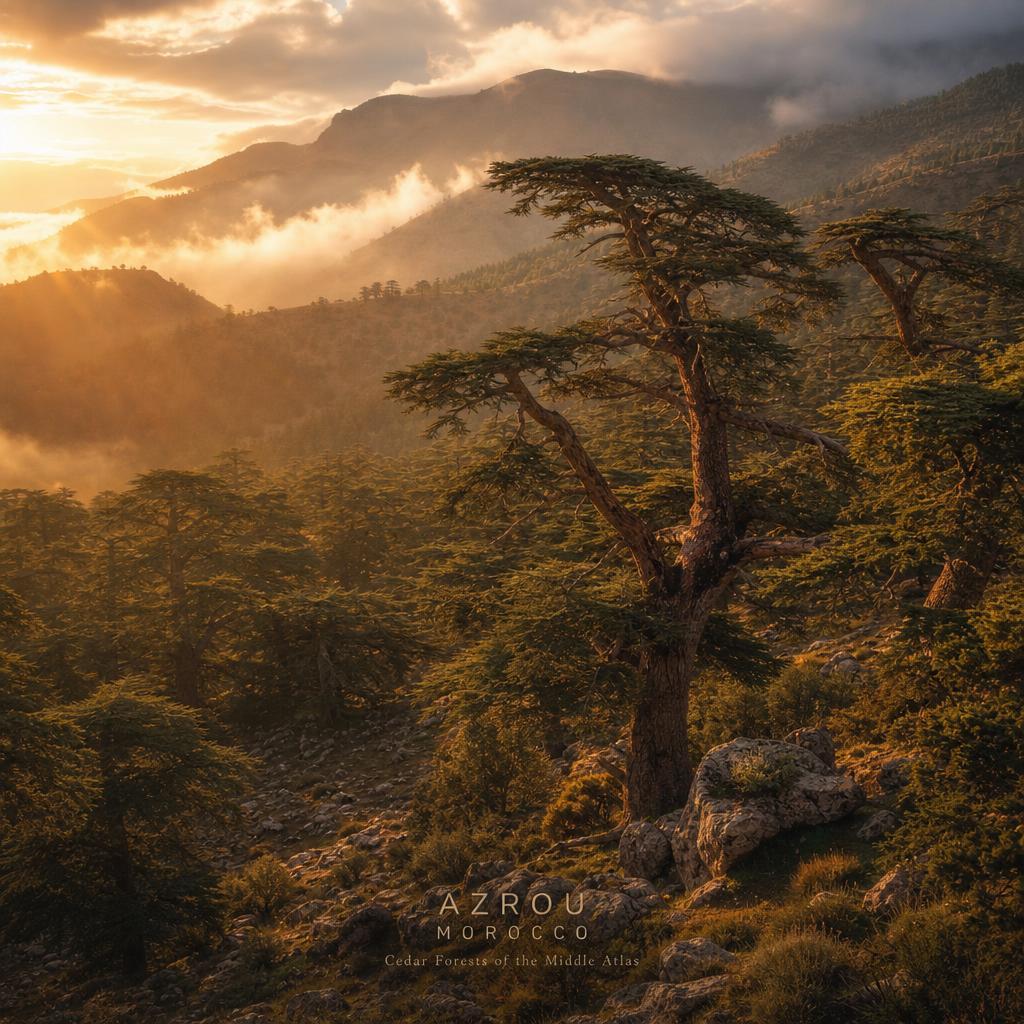
Plan for the lowest common denominator on terrain while finding depth and interest at every level. An older adult who cannot walk far can still absorb an enormous amount of meaning from sitting beneath a cedar tree that is three centuries old — the scale, the silence, the specific quality of mountain light filtering through the canopy. Young grandchildren running between tree trunks in the same clearing creates a layered scene that satisfies multiple generations simultaneously rather than splitting them between separate experiences.
Shared meals or tea breaks are among the most reliable multigenerational moments. If the day includes a stop at a local café or a packed lunch in the forest, build generous time around it. Across generations, sitting together and eating while talking about what was just seen tends to deepen the shared memory more than any specific activity. Ask your guide about options for rest and refreshment that are accessible to older adults and do not require a long walk.
- Map the walking capacity of your least and most mobile group members before planning
- Ask the guide about a hub-and-spoke structure: central rest point with optional longer loops
- Build generous time around shared meals and tea breaks
- Identify accessible surfaces suitable for older adults with walking sticks or limited mobility
- Plan the most active sections for mid-morning when older adults and young children are both at their best
Accessibility Considerations in the Cedar Forest
The Azrou cedar forest is a natural environment without paved paths or standard accessibility infrastructure. Some areas are more accessible than others, and the difference matters significantly for older adults or anyone with mobility limitations. Before arriving, ask specifically whether the planned section of forest has any significant slope, loose rock, or root obstacles. A guide who knows the area well can usually propose an alternative route through a flatter, wider section of the forest that still offers the full atmosphere — old-growth trees, wildlife potential, cool shade — without terrain that creates a safety risk.
Walking sticks or trekking poles are worth packing for older adults even if they do not normally use them; forest floors can be uneven and the additional stability is useful. Closed shoes with a flat grip sole are appropriate for all ages. If any member of the group uses a wheelchair or has significant mobility difficulties, discuss this clearly with the guide before arrival — some sections may be inaccessible and it is better to design around that honestly than to arrive and find the planned route is not workable.
Creating Shared Memories Across Generations
The most durable multigenerational travel memories tend to come from moments of shared wonder rather than shared activity. A macaque troop moving overhead, the sound of wind in a cedar grove, or a grandparent telling a story about their own childhood landscapes while sitting in the forest — these are the moments that different generations remember differently and talk about together for years afterward. A good guide creates space for these moments rather than filling every minute with commentary.
Encourage different family members to take responsibility for different parts of the documentation: a grandparent might write notes, a teenager photographs, a younger child draws what they saw that evening. Assembling these into a shared family record after the trip extends the experience and gives every generation a contribution to the shared memory. The cedar forest visit becomes something the whole family has in common — at whatever level of physical engagement was right for each person.