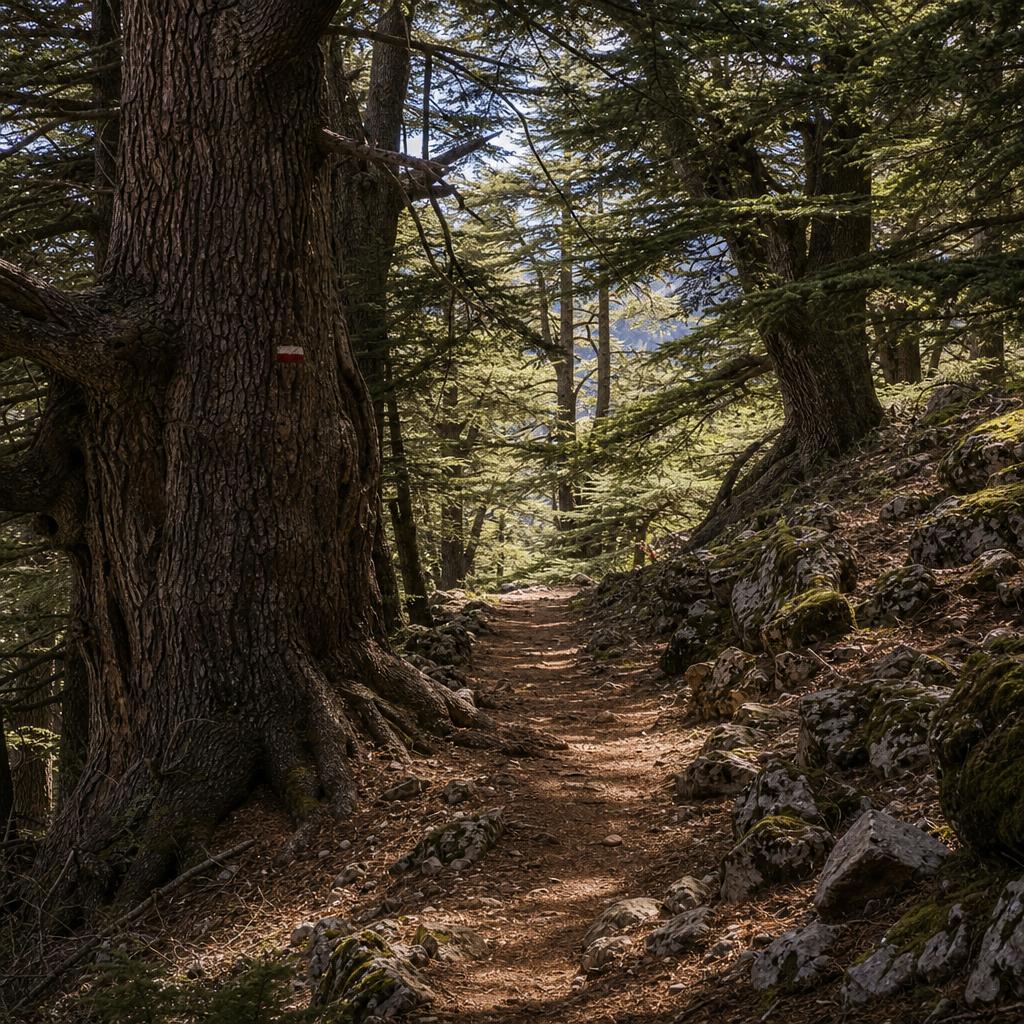
Why the Cedar Forest Works Well for This Age Group
School-age children have enough stamina for a half-day trail, enough vocabulary to engage with nature stories, and enough wonder left to be genuinely impressed by a 300-year-old cedar tree or a macaque troop moving through the canopy. The Azrou cedar forest offers a tactile, sensory environment — rough bark, cool air, the sound of birdsong — that is difficult to replicate through a screen or a classroom. A guide experienced with children can frame the forest through questions rather than lectures, drawing out curiosity rather than broadcasting facts.
A good starting point is identifying what your particular child responds to. Some children are natural wildlife watchers and will slow down instinctively when tracks appear. Others are drawn to tree height and scale, or to the question of why cedars live so long. Sharing these interests with your guide before the walk allows them to emphasise the moments that will land best rather than delivering a one-size-fits-all commentary.
Trail Activities That Engage 5–12 Year Olds
The most effective family guides in the Azrou area use the trail itself as the activity rather than walking between attractions. This might mean looking for animal tracks in soft ground, counting different bird calls, or learning to identify cedars versus other trees by bark texture and leaf shape. Simple challenges — who spots the first macaque, or which direction does the valley run — give children a sense of agency on a walk that might otherwise feel adult-directed.
Older children in this range (ten to twelve) often engage well with slightly more complex ideas: the relationship between the cedar forest and water sources, why macaque troop sizes vary, or how Amazigh communities in the Middle Atlas have shaped the landscape over centuries. A guide can calibrate this depth in real time. Bring a small notebook or a phone camera and encourage children to document rather than just observe — the act of recording something creates a second engagement with the same detail.
- Ask the guide to build in simple identification tasks (birds, trees, tracks)
- Let children set the pace for at least one section of the trail
- Encourage photography or sketching to deepen observation
- Build in a clear rest stop where children can eat, explore, and decompress
Responsible Wildlife Behaviour with Children
Children in this age range are old enough to understand and genuinely internalise wildlife rules — but they need a clear, brief explanation before the encounter, not during it. Explain before entering the forest that Barbary macaques are wild animals who live here permanently, that approaching them, chasing them, offering food, or making sudden loud noises is harmful to the animals and unsafe for the child. Frame this as respect for the macaques' home rather than a prohibition. Most children respond much better to the positive framing of being a respectful visitor.
If a macaque comes very close, instruct children to stand still, keep hands down and away from any bags containing food, and to avoid direct eye contact, which macaques can read as confrontation. A guide who has briefed the group well will be positioned to intervene calmly if a child becomes excited. The most important adult role is modelling the quiet, still behaviour you want children to mirror — children take their cues from the adults beside them.
Making the Day Educational Without Making It Feel Like School
The forest is most effective as an education when the learning feels incidental to the adventure. Resist the temptation to quiz children constantly or to correct their nature observations too quickly — letting a child's own hypothesis stand for a few minutes before the guide offers a nuanced answer often produces more durable curiosity. The goal is for the child to leave Azrou still thinking about what they saw, still generating questions, rather than reciting a list of facts.
End the day with something concrete the child can take home mentally: one thing they saw that surprised them, one question they want to look up, one moment they want to describe to someone at home. This reflective habit is easy to prompt on the drive back and extends the value of the visit well beyond the hours spent in the forest. Many parents report that their children bring up the macaques or the cedar trees weeks after the visit — that kind of lasting impression is the measure of a well-matched family experience.