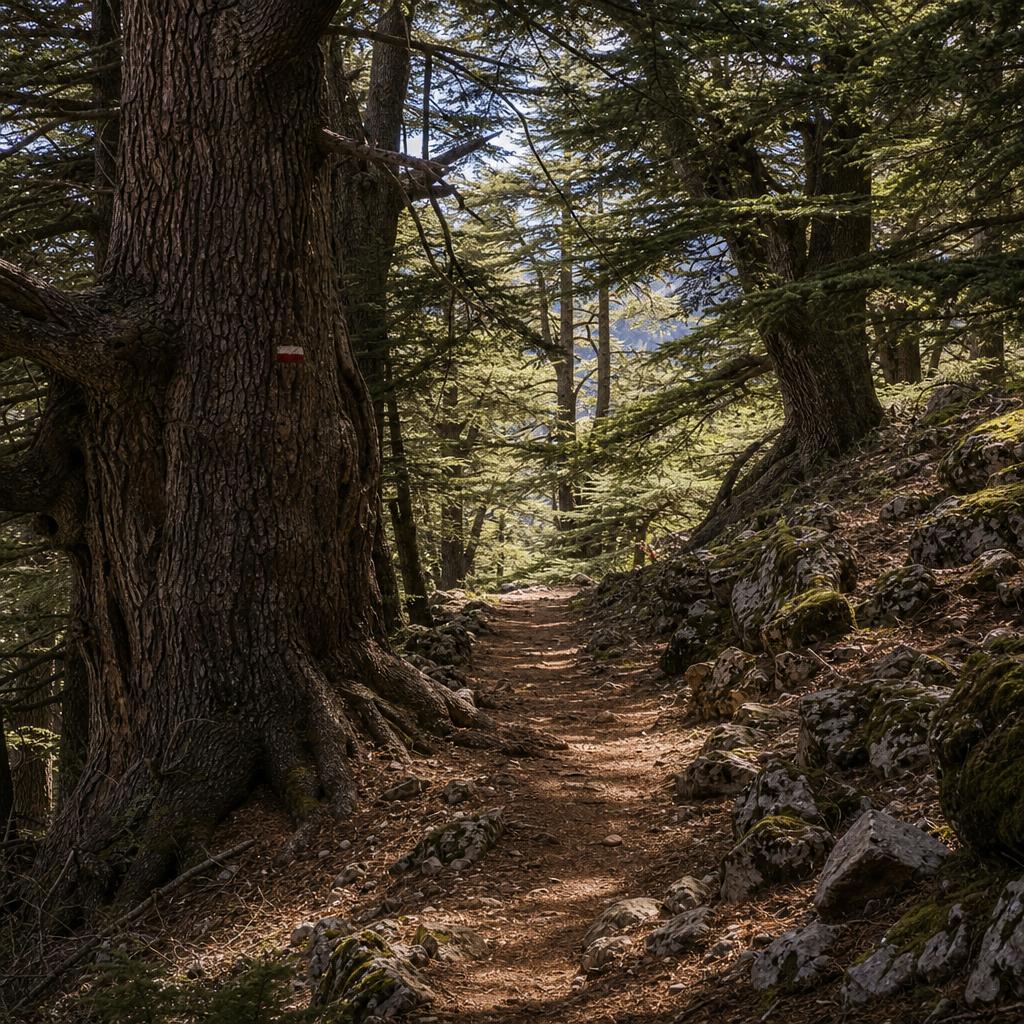
Terrain Hazards: What the Forest Ground Actually Looks Like
The cedar forest near Azrou is not a manicured park. Trails range from wide dirt tracks to narrower paths with exposed roots, loose stones, and occasional muddy sections. For children who are learning to walk confidently on uneven surfaces, this is worth preparing for. The key hazards are trips from surface roots, ankle turns on loose gravel, and reduced visibility on steeper sections where children may misjudge gradient. None of these are alarming with the right footwear and adult supervision — but they become real risks in flip-flops or when children are allowed to run ahead out of sight.
A guide who knows the forest will automatically avoid the most technically difficult terrain with family groups, but it helps to brief children on basic trail behaviour before you begin: walk at a manageable pace, stay on the path, tell an adult immediately if anything feels wrong underfoot. For younger children, physical supervision — holding hands on rooted sections, carrying very young ones when the ground changes suddenly — remains the most effective safety measure throughout the walk.
Weather and Temperature Changes in the Middle Atlas
The Middle Atlas is a mountain environment and the weather can change more quickly than families used to lowland conditions might expect. Summer afternoons can bring brief thunderstorms, sudden drops in temperature under cloud cover, and wind that feels sharp even in July. The cedar canopy moderates temperature during dry conditions, but provides little shelter during heavy rain. Always check a local weather forecast the morning of your walk and ask your guide for their read on the day's conditions — experienced local guides will often adjust timing or route based on what they see in the sky.
Bring a lightweight waterproof layer for every member of the group, including children. These pack small and are worth carrying even on clear mornings. In summer, the reverse problem — excessive heat in open clearings between tree cover — is also worth managing. Sunscreen, hats, and adequate water for the expected duration of the walk (plus a comfortable margin) are the minimum practical preparation. Verify specific temperature ranges and weather patterns for your travel dates with a local source before you visit.
- Check local weather the morning of the walk, not just the day before
- Pack a lightweight waterproof for every member of the group
- Carry more water than the expected walk duration suggests
- Sunscreen and hats for open sections where canopy is thin
- Ask your guide about afternoon thunderstorm patterns in the season you are visiting
Wildlife Safety: Macaques and Other Forest Animals
Barbary macaques are the wildlife most families hope to see in the Azrou cedar forest, and they are genuinely not aggressive toward people who behave calmly and at distance. The safety issue arises almost exclusively when food is visible or accessible, or when people approach them in ways that feel threatening to the troop. A macaque that believes food is available will attempt to take it, and this can involve reaching into bags, startling children, or behaving in ways that frighten a young child even without any actual bite or injury. The prevention is consistent and straightforward: no food visible in macaque areas, no reaching toward animals, no attempting to touch or photograph from closer than a respectful natural distance.
Other forest wildlife — birds, small mammals, reptiles — poses no meaningful safety risk to families. Remind children not to pick up or handle any wild animal they encounter regardless of how approachable it appears. If a child disturbs a snake under a log or rock (rare but possible), the instruction is the same as anywhere in wild country: back away slowly and leave it alone. A local guide will be familiar with what wildlife is genuinely present and can frame this information without either alarming children or dismissing reasonable caution.
Staying Together and Managing Emergencies
Forest trails look more similar to each other than they do on a map, and children who run ahead around a corner can disorient themselves quickly in cedar forest. Establish a clear rule at the start of the walk: adults must be visible at all times. For older children, give them a specific colour or piece of clothing to look back for, or agree on a signal (a whistle, a call) that means 'stop and wait'. A guide at the front and an adult at the rear of the group creates a natural envelope that prevents a child drifting out of sight.
In the event of a medical issue, a twisted ankle, or a child who simply cannot continue the walk, having a clear plan is more calming than improvising. Before beginning any trail, confirm with your guide: how long a walk to the nearest road or vehicle, whether there is mobile phone coverage on the route, and what the evacuation plan would be if someone could not walk. A good guide already has this information and can give you a confident answer. Verify that your travel insurance covers active outdoor activities with children — this is worth checking before you leave home.