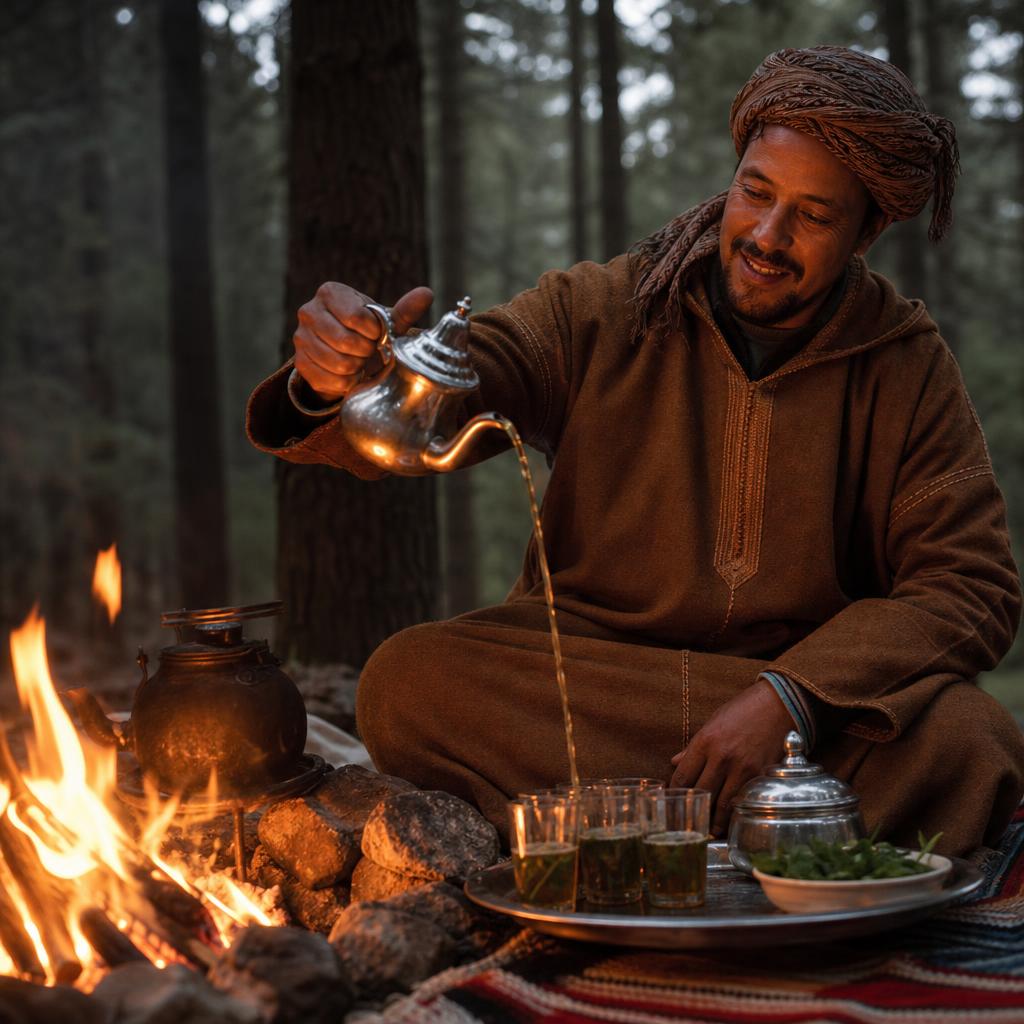
Why the Moment Before the Shot Matters
Photography tourism has left a difficult legacy in some Moroccan communities. Travelers have pointed lenses through doorways, photographed women without consent, and treated daily life as a documentary backdrop for their own story. The result in some places is wariness toward cameras and — in the worst cases — requests for payment that have become a transactional barrier between visitors and residents. None of that started from bad intentions, but accumulated behaviour has consequences.
The good news is that the practice of asking permission costs nothing, takes ten seconds and often produces far better photographs. When someone agrees and knows you are taking their picture, they engage rather than flinch. The image carries a genuine exchange instead of a theft. Your guide can help broker that moment in a way that feels natural rather than formulaic.
How to Ask — Language and Gesture
In Moroccan Arabic, 'mumkin nsawwrak?' (roughly 'may I photograph you?') is widely understood. Holding up your camera or phone and raising your eyebrows in a questioning way communicates the same thing across language barriers. A thumbs-up accompanied by a questioning expression works. Pointing the camera tentatively and waiting — rather than snapping immediately — is the key physical gesture. Your guide can provide the most locally appropriate phrase for the specific community you are in, whether that involves Arabic, Tamazight or French.
When someone agrees, thank them warmly and show them the photograph if you take it. This simple act — turning the screen toward the person so they can see themselves — is genuinely appreciated. It makes them a participant in the image rather than a subject of it. If someone declines, accept immediately and graciously. A 'shukran' (thank you) still applies — you thanked them for their time and the question, regardless of the answer.
- Raise your camera as a question, not a statement
- Wait for a clear affirmative nod or word before shooting
- Show people their photograph immediately after — it builds connection
- Accept any refusal immediately and without visible disappointment
- Never photograph inside mosques, prayer spaces or private homes without explicit permission
- Be especially careful with photographs of children — always ask parents
Crowds, Markets and Candid Photography
Markets and public squares create a grey area: people are in public spaces and the scene feels photogenic and lively. The general principle is the same — when a specific person is clearly the subject of a photograph, ask. Wide cityscape or market-overview shots involve a different calculus, but zooming into a single vendor's face without consent still follows the same standard.
Some travelers worry that asking breaks the mood of candid photography. In practice, a respectful interaction before taking a photo often produces a more interesting image than a stolen shot. A vendor who knows you are interested will show you their goods, a child will do something entirely natural, an elder will settle into their own posture. The 'decisive moment' in ethical travel photography often follows the question, not precedes it.
Photography in Sensitive Contexts
Avoid photographing military installations, official buildings, border posts or individuals who appear to be police or military. This applies across Morocco and is not specific to rural areas. Religious moments — prayer, weddings, funeral processions — deserve particular restraint. Even if you are technically in a public space, a camera aimed at a private moment creates legitimate discomfort.
Photography of extreme poverty, illness or visible hardship requires the most careful judgment. Ask yourself whether the image serves the story you want to tell or simply documents suffering for your own portfolio. There is a difference between documentary work and tourist photography; the standard of consent and dignity should be higher for the latter, not lower. When in doubt, put the camera down.