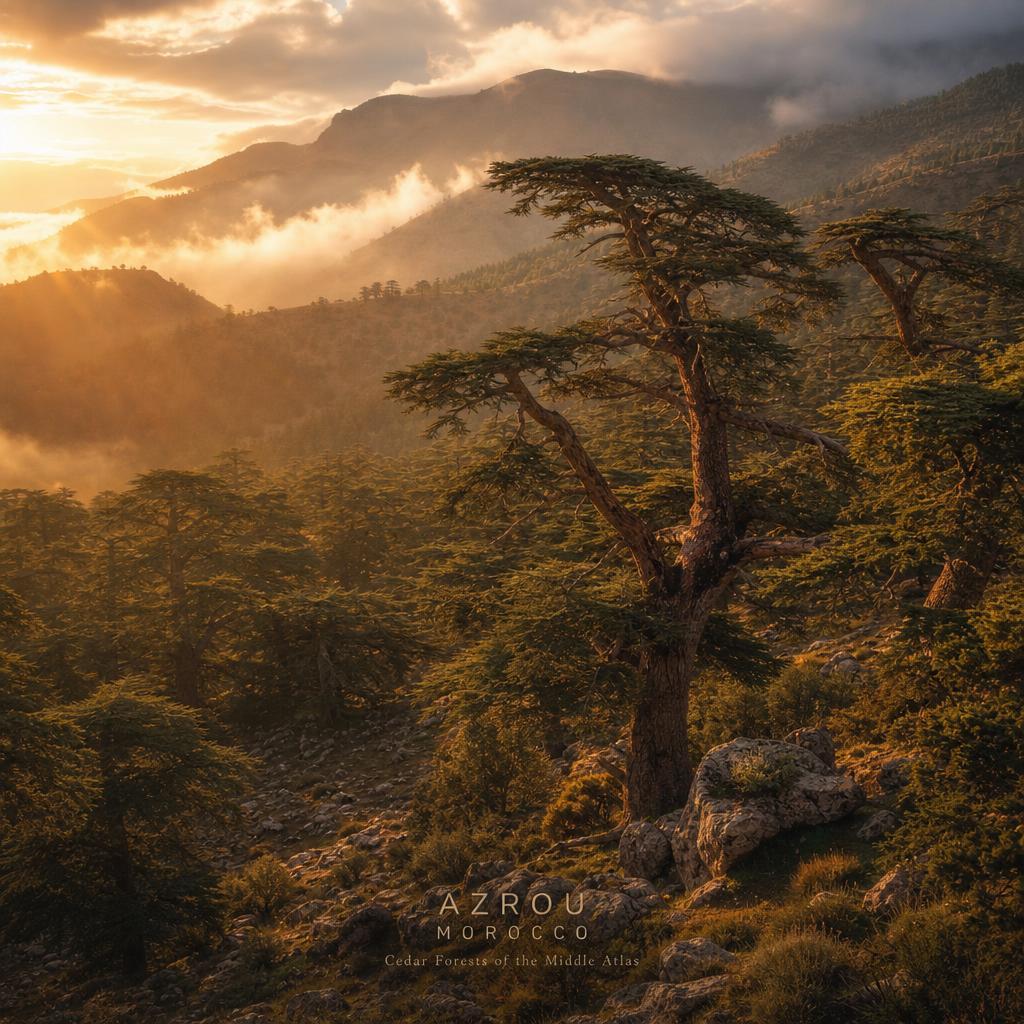
Why Azrou Works as a Base
Azrou sits at the geographical and ecological heart of the Middle Atlas, with cedar forest beginning at the edge of town and a network of mountain routes radiating outward. Using it as a base — rather than a single-day stop — means you can explore the same landscape at different times of day, in different weather, and with more time to go deeper rather than wider. Early morning in the cedar forest feels entirely different from late afternoon; staying overnight lets you experience both.
The town has a modest but practical range of accommodation, from guesthouses to small riads, and a growing number of cafés and restaurants suited to travelers who want to linger rather than rush. It is not Marrakech — Azrou does not offer luxury hotel infrastructure or a busy tourist quarter — but for travelers who want proximity to nature and a sense of authentic Amazigh mountain life, that absence is exactly the point.
What Two or Three Nights Unlocks
One night in Azrou is enough for a forest walk and a meal, but it barely scratches the surface. Two nights allows a proper cedar forest hike on the first day — ideally with time for both macaque observation and a longer trail — and a second day directed toward a different experience: a walk toward a hidden waterfall, a visit to a nearby Amazigh village or an early sunrise walk before breakfast. Three nights opens the possibility of a rest day, a photography-focused outing or a longer trek into the surrounding mountains.
Each additional night also means a morning in the forest before the day-trippers arrive from Fez or Meknes. That window — between roughly 7 and 10 a.m. — is when the cedar forest is at its quietest, the light is at its most photogenic and wildlife is most active. Travelers who stay overnight have access to this window every day; day-trippers rarely do.
- Night 1: Afternoon arrival, short cedar forest orientation walk
- Day 2: Full guided cedar forest hike with macaque observation
- Day 3: Amazigh village walk or hidden waterfall trek
- Optional Day 4: Sunrise walk, photography or rest before moving south
Day Routes From an Azrou Base
From Azrou, Ifrane is a 20-minute drive and makes an easy half-day excursion. The Aïn Leuh waterfalls are another popular day destination when conditions allow — ask locally about current access and seasonal water levels before planning this route, as both vary. The mountain roads around the Azrou area open up further options for scenic drives and viewpoint stops, best explored with a guide or driver who knows current conditions.
Azrou also sits on routes heading south toward Midelt and the high Atlas, which means it works as both a destination and a staging post. Travelers heading south often use an Azrou overnight as a natural break — a day in the cedar forest before continuing into the more dramatic landscape of the southern mountains. That combination of forest and high Atlas is one of Morocco's most satisfying inland routes.
Practical Base-Planning Considerations
Azrou's accommodation options are more limited than in Fez or Marrakech, so booking ahead is important, especially during summer and around national holidays. Ask your accommodation about reliable local transport options for day excursions — many guesthouses have trusted driver contacts who know the mountain roads well. Having a base contact who can help with logistics makes multi-day planning considerably easier.
Provisioning in Azrou is straightforward: the town has a weekly souk (traditionally Tuesday) where fresh produce, local foods and household goods are available, along with daily shops stocking the essentials. There are cafés and local restaurants for every meal. Azrou is not remote — it is a functioning market town — but it does not have a large supermarket or pharmacy on every corner, so plan accordingly for any specialist needs.