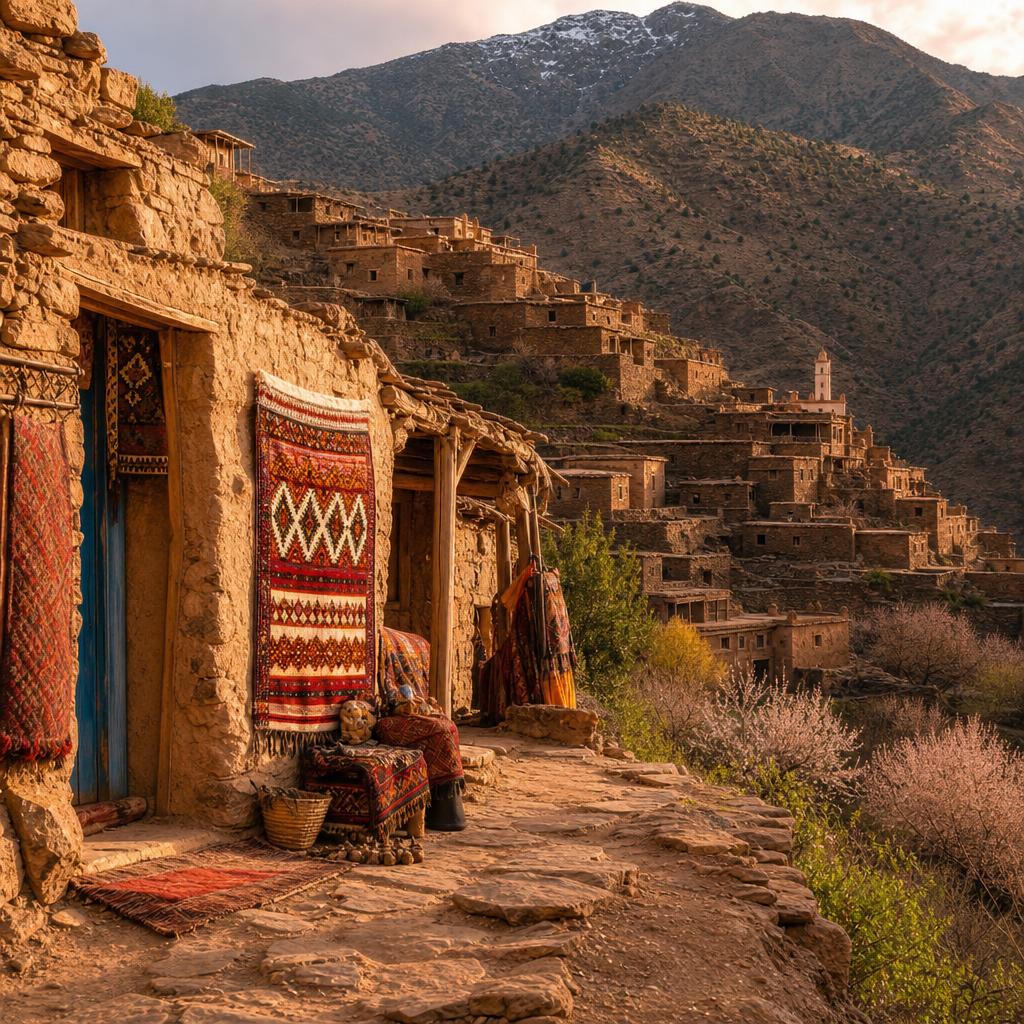
Understanding Azrou's Market Rhythm
Azrou holds a well-known weekly market, typically on Tuesdays, that draws buyers and sellers from surrounding villages. Unlike purpose-built tourist souks in larger cities, this is primarily a local working market: livestock, produce, household goods, textiles and seasonal food occupy the majority of the space. Visitors are welcome, but the market is not designed around them — which is precisely what makes it interesting.
Arriving early gives you the fullest picture and cooler conditions. The most photogenic and atmospheric sections tend to be the produce and livestock areas, though the textile stalls are where you are most likely to find handmade Amazigh weaving and carpets. Confirm current market days and hours locally before planning your visit — schedules occasionally shift around holidays.
Browsing Without Obligation
In Moroccan market culture, browsing is not an implicit commitment to buy, but strong eye contact and engaged conversation with a vendor does signal interest. If you pick something up, examine it, ask questions and then walk away, that is normal — sellers expect it. What to avoid is entering prolonged price negotiation, accepting tea in a carpet shop and then leaving abruptly; the social investment on both sides makes that interaction feel unresolved.
For casual browsing, keep your hands in your pockets or clasped behind your back and look from a slight distance first. A friendly nod acknowledges the seller without opening a sale. If you are genuinely curious about something, approach and ask — a simple question about a piece of weaving or a food item opens a natural conversation. Genuine curiosity is never unwelcome.
Bargaining and Fairness
Price negotiation is a normal part of market commerce in Morocco, but the visitor version of 'bargaining' can go wrong when it becomes a sport rather than a conversation. The goal is to agree on a fair price that respects the seller's work — not to 'win' by driving the price as low as possible. Artisans often have real costs in materials and time; a textile that took days to weave deserves a price that reflects that, not a reduction to the nearest souvenir-shop equivalent.
A useful approach: ask the price, consider whether it feels reasonable to you (rather than comparing to your home context), make a counter-offer once if you want, and be prepared to either accept the outcome or politely walk away. Smiling throughout keeps the whole thing good-natured. If a vendor says no, accept that — it is their product and their decision. Aggressive negotiation or implied offence at a price makes for an awkward interaction that benefits no one.
- Know roughly what you want before engaging deeply with a vendor
- One counter-offer is usually enough — accept the result either way
- Do not compare prices at a local market to factory-made equivalents
- Walking away is always fine; returning later to accept an earlier price is also normal
- Small purchases at the food stalls rarely involve negotiation — the listed price is the price
Market Manners That Make a Difference
Keep movement through busy sections gentle and deliberate — bumping into displays or people creates friction. If the market is crowded, adjust your bag to the front to avoid knocking into stalls. Bargaining over food — especially staple produce like vegetables, eggs or bread — can feel disrespectful to farmers who are selling necessity goods at modest margins. Save price conversation for crafts and textiles where it is more conventionally expected.
Your guide, if you have one, can orient you quickly and help you understand the layout, the seasonal specialties on offer and who makes what. Independent visitors can navigate the market fine, but a local presence helps you understand what you are looking at — turning a visual spectacle into a genuinely informative experience about Middle Atlas agricultural and artisan life.