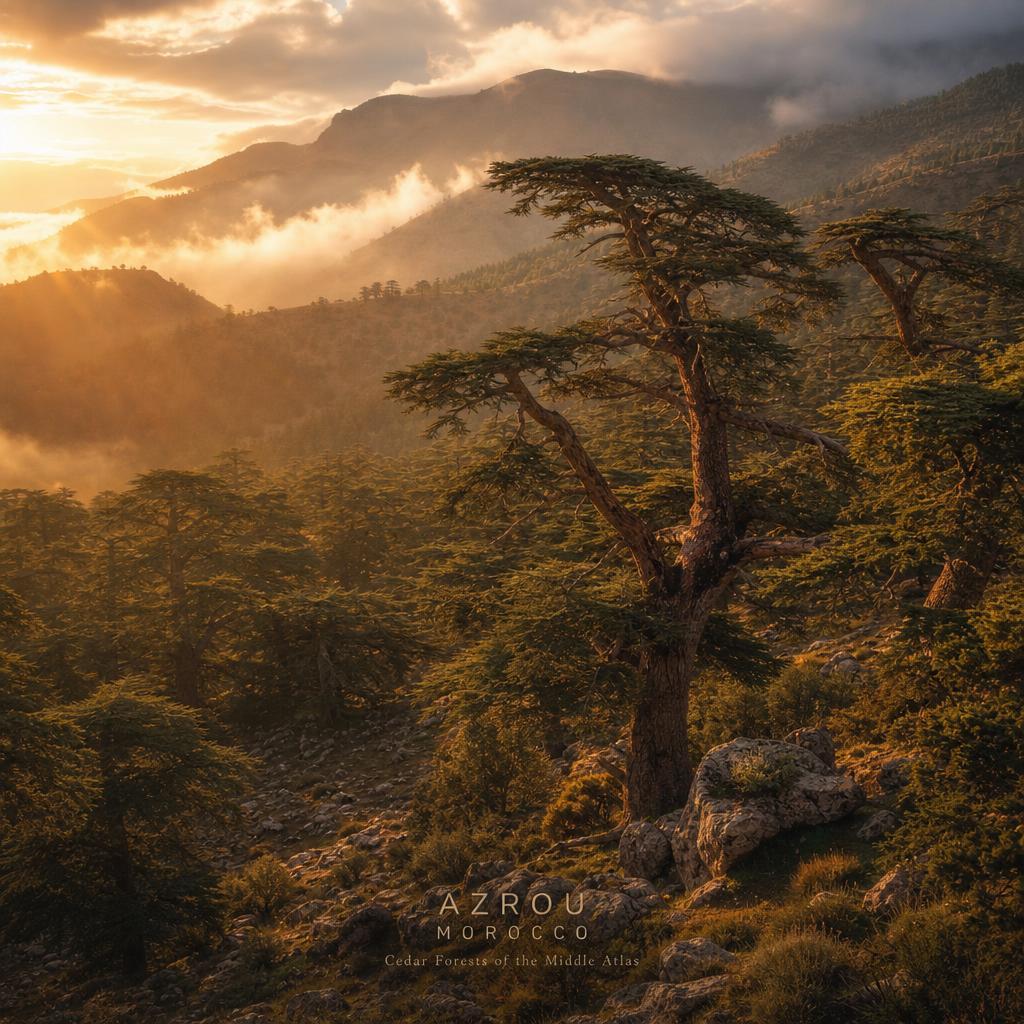
Why the Two Experiences Belong Together
The cedar forest and the town of Azrou are not separate destinations that happen to be near each other — they are two faces of the same landscape. The Amazigh communities of Azrou have lived within and alongside the cedar forest for generations; the forest shapes the local economy, the seasonal rhythms, and the cultural identity of the town. Understanding the town helps you understand the forest, and the forest makes the town's relationship with the land more legible. Visiting both in the same day is not just convenient — it tells a more complete story.
The practical sequence that works best is: forest in the morning, town in the afternoon. The forest rewards early presence (better light, cooler air, more active wildlife), while the town warms up through the morning and is most alive in the afternoon when the market stalls are doing business and the cafés are full. Trying to reverse this sequence is possible but tends to feel less natural.
Morning: Getting the Most from the Cedar Forest
Arrive at the forest trailhead by 9 a.m. at the latest, earlier if your primary goal is wildlife observation or photography. A guided walk of two to three hours covers enough forest to give you a real sense of scale, ecology, and the silence that the cedar canopy creates. A good local guide will navigate you away from the main tourist paths toward quieter sections where the forest feels less managed and more genuinely ancient. Barbary macaques may be encountered along the way; if they are, maintain a respectful distance and follow your guide's lead absolutely.
The main tourist path through the cedar forest is well-marked and accessible without a guide, but a guided walk adds the ecological and cultural context that transforms a pleasant walk into an experience with real depth. If you have young children, a guide also means the walk adapts to their pace and attention span, with stories and discoveries built in rather than left to chance.
Midday: The Transition Back to Town
Return from the forest by midday or early afternoon for lunch in Azrou town. A bowl of harira, a tagine, and fresh bread at a local restaurant is one of the most satisfying transitions in Moroccan travel: from cool cedar shade to the warmth and noise of a functioning market town. Most of Azrou's better local restaurants are clustered around the central square and the main market street; your guide or guesthouse host will have a current recommendation.
After lunch, the afternoon in town is yours to explore at will. The town centre is compact and walkable. The covered market area is worth spending time in — it is not a tourist craft market but a working local market, which makes it considerably more interesting. Stalls sell everything from winter clothing to agricultural tools to fresh produce, and the flow of people gives a genuine picture of daily life in a Middle Atlas Amazigh town.
Afternoon: Reading the Town on Its Own Terms
Azrou's town centre holds several points of quiet interest that reward a slow afternoon walk. The rock formation for which the town is named sits near the centre; finding it involves exploring the older streets rather than following a sign, which is part of the enjoyment. The Amazigh script that appears in shops, signage, and graffiti is a reminder that this is an Amazigh-speaking community with its own linguistic and cultural heritage that predates the Arabic-speaking majority. Notice without intruding.
A café stop in the mid-afternoon is a natural pause. Moroccan mint tea, a glass of café au lait, and a slow watch of the street from a terrace is not idling — it is paying attention to a place on its own terms. This kind of unhurried observation is what distinguishes a visit from a checklist. Leave for your next destination or accommodation feeling like you have genuinely been somewhere, not just passed through it.
- Morning: forest walk with guide (2–3 hours, start by 9 a.m.)
- Midday: return to town for lunch at a local restaurant
- Afternoon: market area, town walk, café stop
- Evening: early dinner, or depart refreshed for your next destination