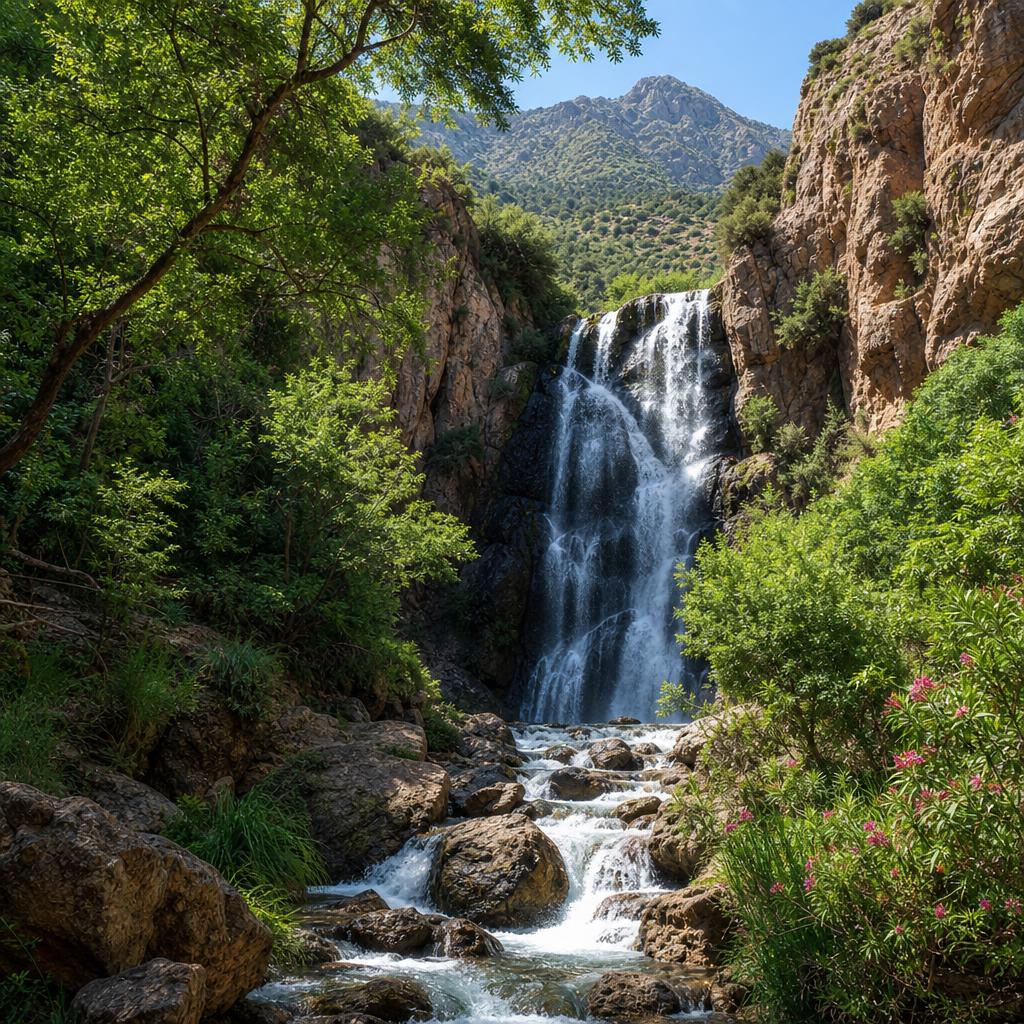
The Middle Atlas Is Not a Fixed Destination
The cedar forest, waterfall routes, and village paths around Azrou change significantly across seasons and even between weeks in the same season. A waterfall trail that was flowing well in May may be dry by late July. A forest section that was comfortable in spring may be slippery after an August storm. A macaque troop whose territory shifts with fruiting trees may be in a different part of the forest than expected. These are not failures of planning — they are the nature of a living mountain landscape.
A tour that follows conditions rather than a fixed itinerary treats this variability as an asset rather than an obstacle. When a local guide knows the terrain well enough to make real-time route decisions — substituting a better-condition path, choosing a viewpoint that fits the day's light, avoiding a section that is unsafe after recent rain — the result is an experience that reflects the actual landscape rather than a rehearsed performance of it.
Safety Reasons for Flexible Route Planning
Following conditions is not only about quality — it is also a fundamental safety practice in mountain environments. Trail conditions, water levels, and weather change faster than any online forecast captures, particularly at the altitude of Middle Atlas hiking routes. A guide who has been in the forest that week, or who has spoken with other local people who have, holds safety-critical information that no itinerary can incorporate in advance.
When you book a custom tour in Azrou, you are engaging someone with current, specific local knowledge. Using that knowledge means accepting that the planned route may change. This flexibility is a feature, not an inconsistency. A guide who insists on the original plan regardless of what conditions suggest is prioritizing reputation management over your safety and experience — which is the opposite of the standard a good local guide upholds.
How to Plan a Custom Tour That Stays Responsive
The starting point for a genuinely flexible custom tour is an honest pre-tour conversation about your interests, physical abilities, and any non-negotiable elements — a specific viewpoint you want to photograph, a cultural visit, a waterfall experience. This gives the guide a clear brief to work from while retaining the flexibility to choose the best available route on the day. Share your fitness level and walking experience accurately, as this shapes every route decision the guide makes.
Agree in advance on a communication plan if weather or conditions on the day require a significant change. Good local guides will contact you the evening before or the morning of your tour with an honest update. If they say conditions are not safe or optimal for the planned activity, trust that assessment and discuss alternatives. The Middle Atlas has enough variety that an adapted day — cedar forest instead of waterfall, forest photography instead of a challenging ridge — is rarely a disappointment.
- Share your physical abilities and walking experience honestly before the tour
- List your must-see elements, but keep the route itself flexible
- Agree on a contact time the evening or morning before so conditions can be assessed
- Trust your guide's real-time route decisions — they reflect current local knowledge
- Ask for alternatives if the primary plan changes — the Middle Atlas offers multiple good options
Responsible Travel and Conditions-Led Itineraries
A conditions-led tour approach is also environmentally responsible. A guide who avoids a muddy section protects that trail from erosion. One who moves away from a stressed macaque troop protects the animals' wellbeing. One who does not take a group to a waterfall when the approach is unstable avoids damage to fragile seasonal stream ecosystems. These adjustments, invisible to travelers caught up in the experience, are part of what makes locally guided travel in the Middle Atlas genuinely responsible rather than simply marketed as such.
When you travel with a guide who follows conditions, you also model a form of travel that does not demand nature perform on a schedule. This attitude — treating wildlife encounters, landscapes, and cultural exchanges as real experiences that happen on their own terms rather than contracted deliverables — is at the heart of responsible travel. It produces better memories, a smaller footprint, and a form of tourism the Middle Atlas can sustain across generations.