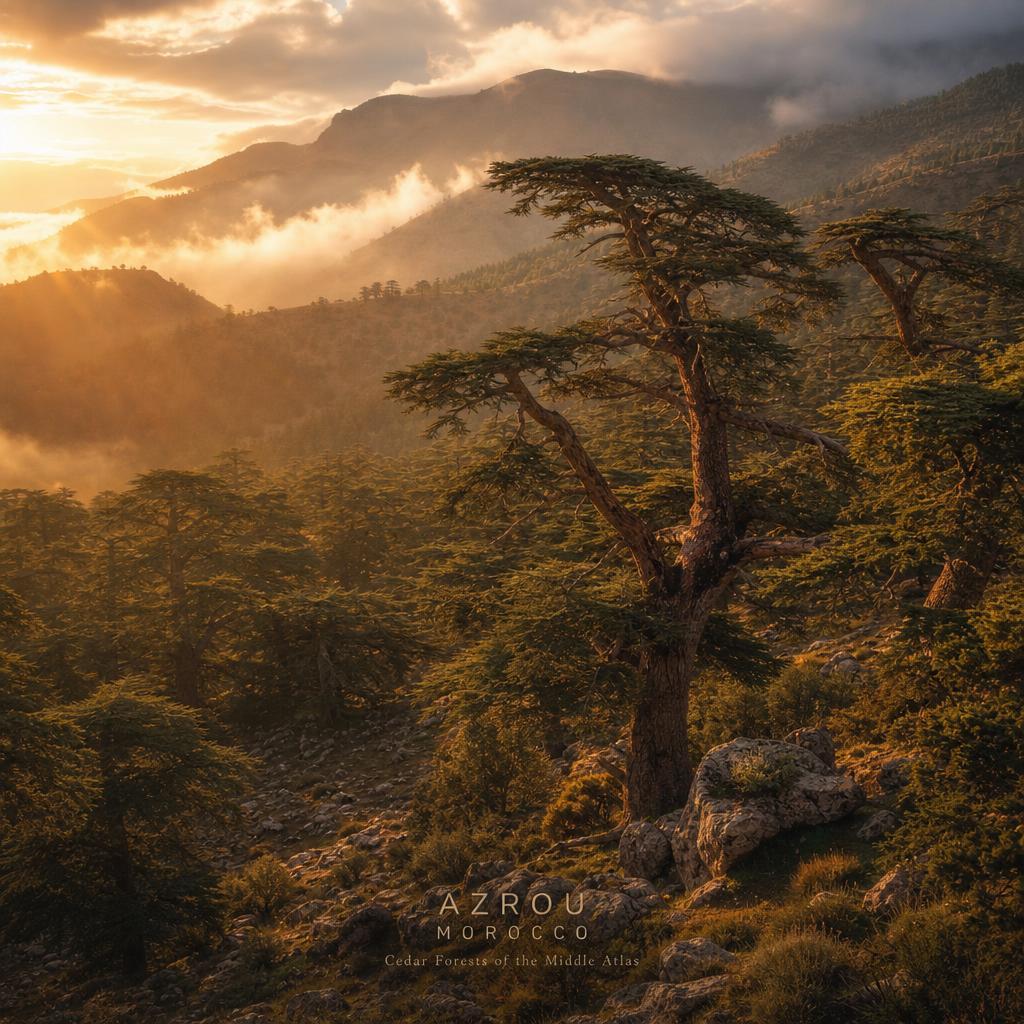
Autumn Light and Forest Atmosphere
From September onwards, the angle of the sun in the Middle Atlas drops lower and the light becomes warmer and more directional. Cedar trunks — already striking in spring and summer — take on a deeper amber quality in the afternoon hours. The forest understorey gains a mix of yellowing grasses and late-season wildflowers, and the air has a crispness that makes walking feel easier. For anyone interested in landscape or forest photography, this shift in quality light is one of the strongest arguments for an autumn visit.
The soundscape changes too. Summer visitors and their noise recede after August. Migratory birds begin to move through the Atlas in September and October, adding species that are absent in summer. The overall sense is of a forest returning to its own rhythm after a busy period — which is an experience worth planning around even if natural history is not your primary interest.
Hiking and Trail Conditions in Autumn
Trail surfaces dry out fully from the summer months and remain firm and walkable through most of autumn. This makes for clean, predictable hiking without the mud of spring. Day temperatures in the comfortable mid-teens to low-twenties Celsius (though variable at altitude) are well suited to walking at pace, and the cooler air means less fatigue on ascents. The hidden waterfalls trek becomes less reliable as autumn progresses — some cascades that flow well in spring and early summer slow to a trickle by October — but the forest and mountain scenery remains compelling in itself.
Shorter daylight compared with summer is the main practical adjustment for autumn walkers. By late October, useful hiking light ends noticeably earlier than in August. Plan route start times with this in mind, particularly on longer full-day itineraries. Your guide will be familiar with the current daylight window; it is always worth confirming departure times the evening before.
- Trails are typically dry and firm from September to November
- Waterfall flow varies — ask your guide about current conditions before a waterfall trek
- Start longer hikes early to make full use of shrinking daylight
- Carry a warm layer for the return leg if you will be walking after 4 p.m.
Wildlife in the Autumn Forest
Barbary macaque activity tends to be steady through autumn. Groups are well established after the spring breeding period and young animals from earlier in the year are now more mobile and curious, which can make sightings engaging. The same ethical rules apply in every season: observe from a respectful distance, never feed or approach the animals, and follow your guide's lead on when and where to stop. A quiet, patient observer typically has a more rewarding experience than someone who tries to create an encounter.
Autumn also brings changes in how the macaques interact with their habitat. They range more actively as they build energy reserves before winter, which means they can appear in sections of the forest you might not encounter in summer. Guided walks with someone who tracks current troop patterns are far more productive than self-guided wandering, particularly in the off-peak autumn season when the animals are less concentrated near well-worn visitor paths.
Practical Autumn Planning
Autumn is a shoulder season in Azrou, which means easier accommodation availability and a generally calmer atmosphere in town. Guesthouses and cafés around the main square remain open, and the pace of life slows pleasantly after the summer rush. If you have flexibility in your travel dates, October is widely considered one of the most enjoyable months in the Middle Atlas for its combination of comfortable temperatures, good light and manageable visitor numbers.
Packing for autumn means planning for variable temperatures within a single day. A T-shirt level midday and a fleece-level evening is a realistic expectation from September onwards. The first significant cold spells of the season can arrive in late November, so later autumn visits benefit from warmer layering options. Check the forecast a few days before arrival and ask locally about recent weather patterns.