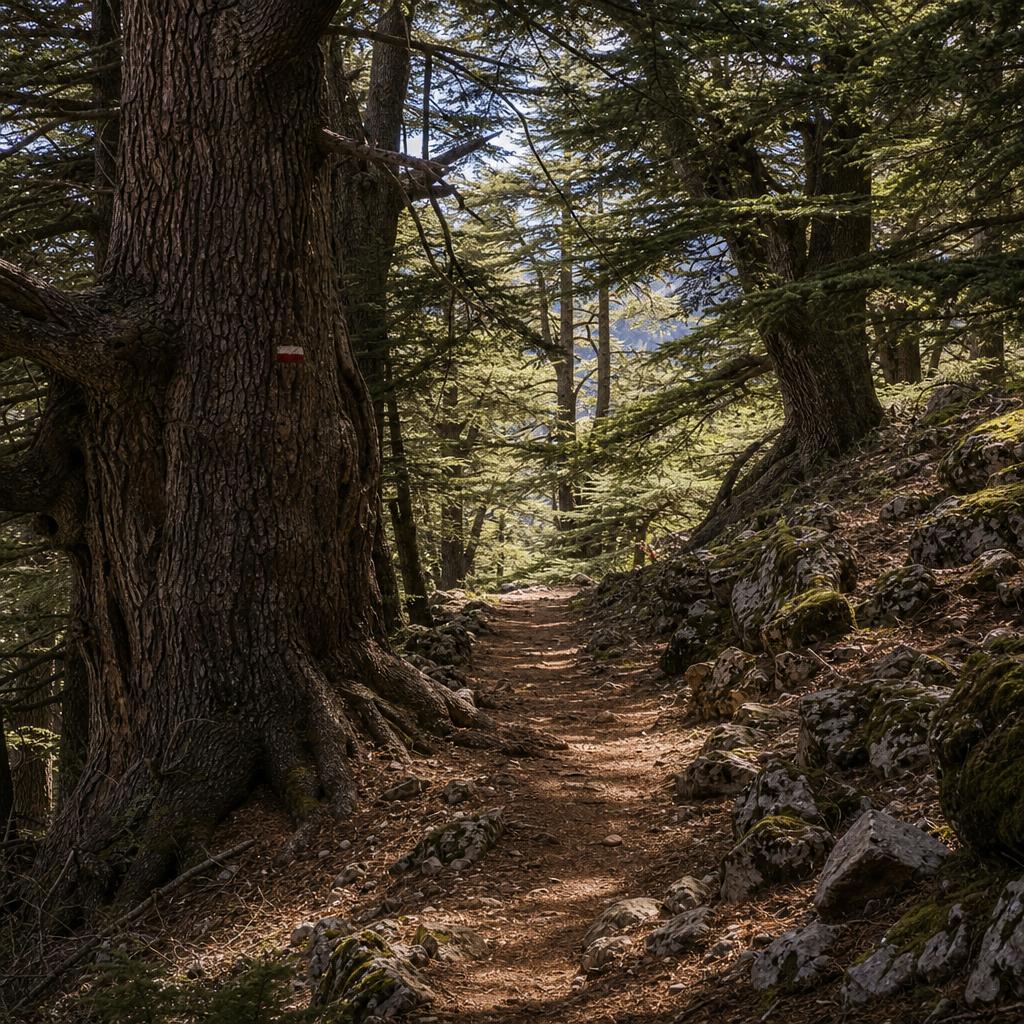
What the Middle Atlas Looks Like in Spring
Between March and May the Middle Atlas sheds its winter quiet and shifts into something livelier. Snow retreats from the higher ridges, meltwater feeds streams that were dry or sluggish through winter, and the cedar forest floor gains a layer of undergrowth that softens the light beneath the canopy. Wildflowers appear across the open meadows around Azrou — yellow broom, deep-violet irises and small white blossoms that locals gather for herbal uses. The landscape feels generous in spring: wide, green and full of movement.
Temperatures at Azrou's elevation (roughly 1,900 metres) typically sit in the comfortable range for walking — cool in the early morning, warm enough by midday to shed a layer. Evenings remain fresh, and cloud cover can roll in quickly from the west, so rain showers are part of the picture. They rarely last long, and the forest after rain has a particular stillness that many visitors remember as a highlight. Verify current conditions locally before heading out on longer trails, as early spring can still bring unexpected weather.
Wildlife and Forest Activity in Spring
Barbary macaque troops in the cedar forest are notably more active in spring. Family groups with young animals can sometimes be observed — a behaviour that requires extra patience and a respectful distance. The key rule remains constant regardless of season: do not feed, touch, chase or attempt to surround macaques. Ethical observation from a quiet position, guided by someone who understands troop patterns, gives you far better encounters than any attempt to attract the animals artificially.
Birdlife also increases through spring as migratory species return to the Atlas. The forest holds year-round residents including woodpeckers and nuthatches, but the chorus is noticeably richer from April onwards. A morning walk — even a gentle one — before the heat of the day builds tends to produce the most sightings. If wildlife is a priority, mention it when planning your visit so your guide can choose forest sections with current activity.
- Keep voices low and movement slow near macaque troops
- Stay on established paths to avoid disturbing ground-nesting birds
- Binoculars add a lot — compact models work well in the forest
- Spring mornings are the most productive window for wildlife watching
Waterfalls and Trekking Conditions
Hidden waterfalls in the Azrou area are at or near their seasonal peak in spring. Snowmelt from the higher Atlas combines with spring rain to push cascades that can run almost dry by late summer. If seeing waterfalls in good flow is part of your plan, spring — particularly late March through May — is the window to aim for. Trail surfaces, however, can be muddy after rain. Sturdy shoes with grip matter more in spring than in any other season.
Full-day treks are comfortable in spring temperatures, and the extended daylight compared with winter months means you are not racing against an early sunset. Half-day routes remain popular for visitors combining multiple activities — a cedar forest walk in the morning alongside a village visit in the afternoon, for example. Routes change with conditions, so always confirm the current state of any specific trail with your guide before departure.
Practical Spring Planning for Azrou
Spring is a popular season in Azrou, and accommodation fills faster around Moroccan and European school holidays. Planning at least a few weeks ahead is wise, particularly for private guided tours on specific dates. The town itself is easy to navigate in spring — cafés and market stalls around the central square (Place Mohammed V) are open, and the atmosphere is relaxed without the peak summer crowds.
Layers are the practical answer to spring weather. A waterproof outer layer, a mid-layer for mornings and evenings, and lighter clothes for the middle of the day cover almost every scenario. Sun protection matters even on overcast days at altitude. If you are arriving by public transport from Fès, confirm bus times locally as schedules can shift seasonally.