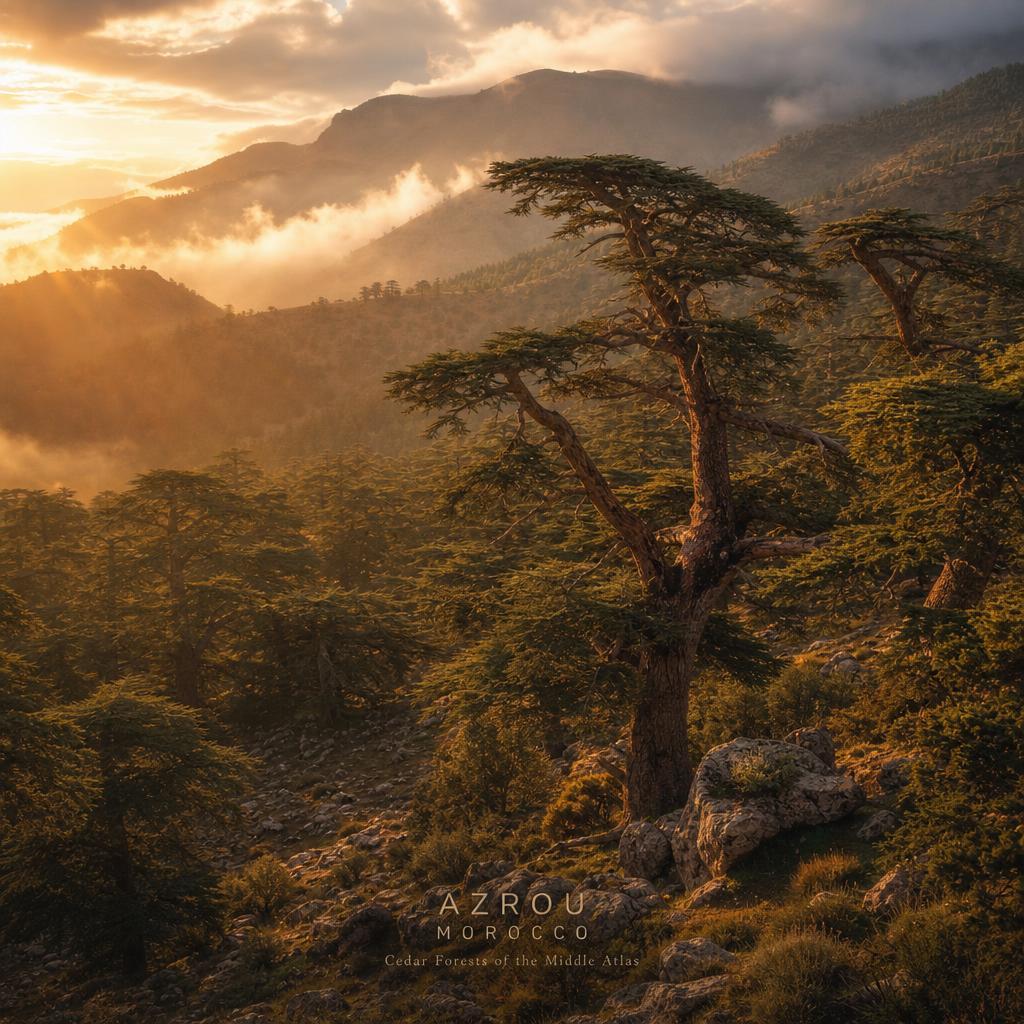
Altitude and Temperature: Why Azrou Feels Different
Azrou sits at around 1,900 metres above sea level in the Middle Atlas. At that elevation, summer daytime temperatures are typically far more comfortable than Marrakech, Fès or the Atlantic coast during the same period. Mornings and evenings can still feel genuinely cool — a light jacket is often useful before 9 a.m. and after sundown. The cedar canopy adds another layer of natural climate control, dropping temperatures noticeably on the shaded forest paths.
That said, summer afternoons on exposed ridges or open meadows can be warm, and sun intensity at altitude is stronger than at sea level. Sun protection — hat, sunscreen, sunglasses — matters more than visitors sometimes expect. Hydration matters too. Bring more water than you think you need on any trail that moves out of the shade.
What Summer Does to the Forest and Wildlife
The cedar forest is at its most visited in summer, partly because domestic Moroccan tourists and diaspora families travel in school-holiday periods, and partly because European visitors deliberately seek altitude to escape lowland heat. The forest near the main road can feel busy on weekday afternoons. Moving to quieter sections with a guide makes a meaningful difference — the forest is large, and most visitors only see a small fraction of it.
Barbary macaques remain present in summer, though troop patterns can shift as they follow food availability deeper into the forest. Water sources become sparser after the spring snowmelt, which affects where wildlife concentrates. Waterfalls may be reduced to a trickle or dry entirely by mid-summer — check current conditions before planning a waterfall-specific trek. A guided walk that reads the seasonal landscape honestly will serve you better than one that promises fixed sightings.
- Visit the busiest forest sections early in the morning to avoid crowds
- Ask your guide about current macaque locations rather than assuming fixed spots
- Do not expect summer waterfalls to match spring flow — verify before you go
- Cedar shade is real and significant; plan your day to stay in it during peak heat
Long Days and How to Use Them
Summer days in the Middle Atlas are long — sunrise comes early and useful daylight extends well into the evening. This gives a flexibility that shorter-day seasons cannot match. A sunrise walk in the cedar forest followed by breakfast, an Amazigh village visit in the mid-morning and a relaxed afternoon in Azrou town is a genuinely achievable single day in summer. For multi-day visitors, the long light also opens up photography opportunities that are limited in autumn and winter.
Early morning remains the best window for wildlife, cooler temperatures and photography quality. If you are doing a sunrise walk, summer means starting very early — light arrives earlier than visitors sometimes expect. Confirm the specific departure time with your guide the evening before, as it shifts noticeably across the season.
Summer Crowds and Practical Considerations
Azrou attracts both domestic and international visitors in summer. Accommodation books up — sometimes weeks in advance — for popular guesthouse rooms during July and August. Restaurants and cafés around the main square are busy and lively, which many visitors enjoy. The weekly market (souk) is worth timing your visit around; confirm the current market day locally.
Traffic on the main Fès–Azrou road increases in summer, which can affect journey times. If arriving from Fès by grand taxi or CTM bus, plan for slower travel than you might expect from map distances. Within the forest area, parking at well-known spots becomes congested in the afternoon — another reason to start your day early.