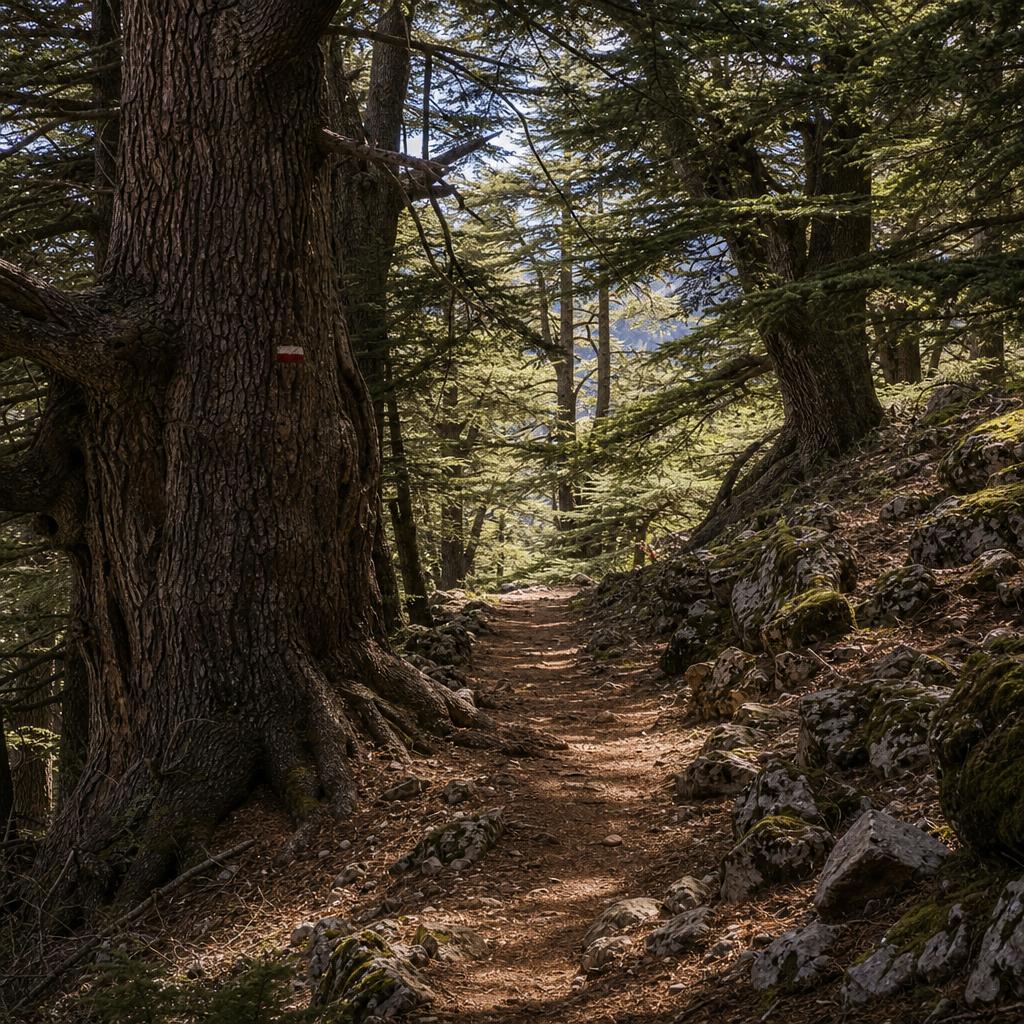
Winter Conditions in the Middle Atlas
Azrou's altitude means proper winters. Snow is realistic from December through February and can arrive as early as November or linger into March, though the timing and depth vary considerably from year to year. A heavy snowfall can transform the cedar forest overnight — deep-green canopies draped in white, animal tracks crossing open clearings, complete silence except for the odd branch shedding its load. It is genuinely striking, but it also means road access, trail safety and tour availability all depend on conditions that can change rapidly.
Temperatures drop below freezing on winter nights and can stay there into the morning hours. Daytime highs in December and January are typically cool but not extreme — often between 5°C and 12°C on clear days — though wind chill makes exposed sections feel significantly colder. The message for winter visitors is not 'stay away' but 'arrive genuinely prepared'. The forest rewards the effort.
What Winter Means for Tours and Trails
Not all tours operate normally in winter. Off-trail waterfall treks become more hazardous on icy or snow-covered terrain and may not be available depending on conditions. Gentle cedar forest walks, wildlife observation and shorter routes are often still feasible when the weather is stable, and a snowy forest walk with a local guide is an experience that no other season can offer. Sunrise walks exist in winter too — the light on snow is extraordinary — but they require genuine cold-weather layering and an early start into very low temperatures.
Local guides who know the forest well are more valuable in winter than in any other season. They understand which paths drain well, where ice forms first, which sections become impassable and where the macaques shelter on cold days. Plan your winter tour directly with your guide a day or two before, confirming the forecast and discussing which experience makes sense. Flexibility is not just a preference in winter — it is a practical necessity.
- Confirm tour availability the day before — winter conditions change overnight
- Waterfall and off-trail treks may be unsuitable in icy or deep-snow conditions
- Cedar forest walks and wildlife observation can work well on stable winter days
- Sunrise walks are possible but demand proper layering and cold-weather footwear
Barbary Macaques in Winter
Barbary macaques are year-round residents of the cedar forest and are visible in winter, though their behaviour and locations shift. Cold weather encourages troops to move less and shelter more, often in dense cedar sections that offer wind protection. Sightings on cold, grey days can be harder to achieve than in the active spring and summer months, but on a clear, still winter morning the macaques are often more settled and easier to observe at length because they move with less urgency.
The ethical rules remain the same in every season. Do not feed macaques, do not attempt to touch or approach them, and follow your guide's lead on distance and movement. In winter, when the animals have fewer energy reserves to waste, disturbing a resting troop is especially unhelpful. Patient observation from a respectful distance is the right approach in any month.
Practical Essentials for a Winter Visit
Cold-weather clothing is non-negotiable for a winter visit to Azrou. Thermal base layers, a insulating mid-layer, a windproof outer shell, warm hat, gloves and waterproof boots with grip are all worth carrying. A single warm layer on top of summer clothes is not enough for outdoor time in the cedar forest in January. Azrou town has a few small shops, but gear availability is limited — bring everything you need from home or from a larger city.
Accommodation availability in winter is generally good — it is the quietest season for tourism — though some smaller guesthouses close or reduce services outside peak periods. Confirm that your chosen accommodation is open and offering meals before arrival. Evenings in Azrou in winter are best spent around a wood fire with local food; restaurants near the main square serve warming tagines and soups that are a genuine pleasure after a cold-weather forest walk.