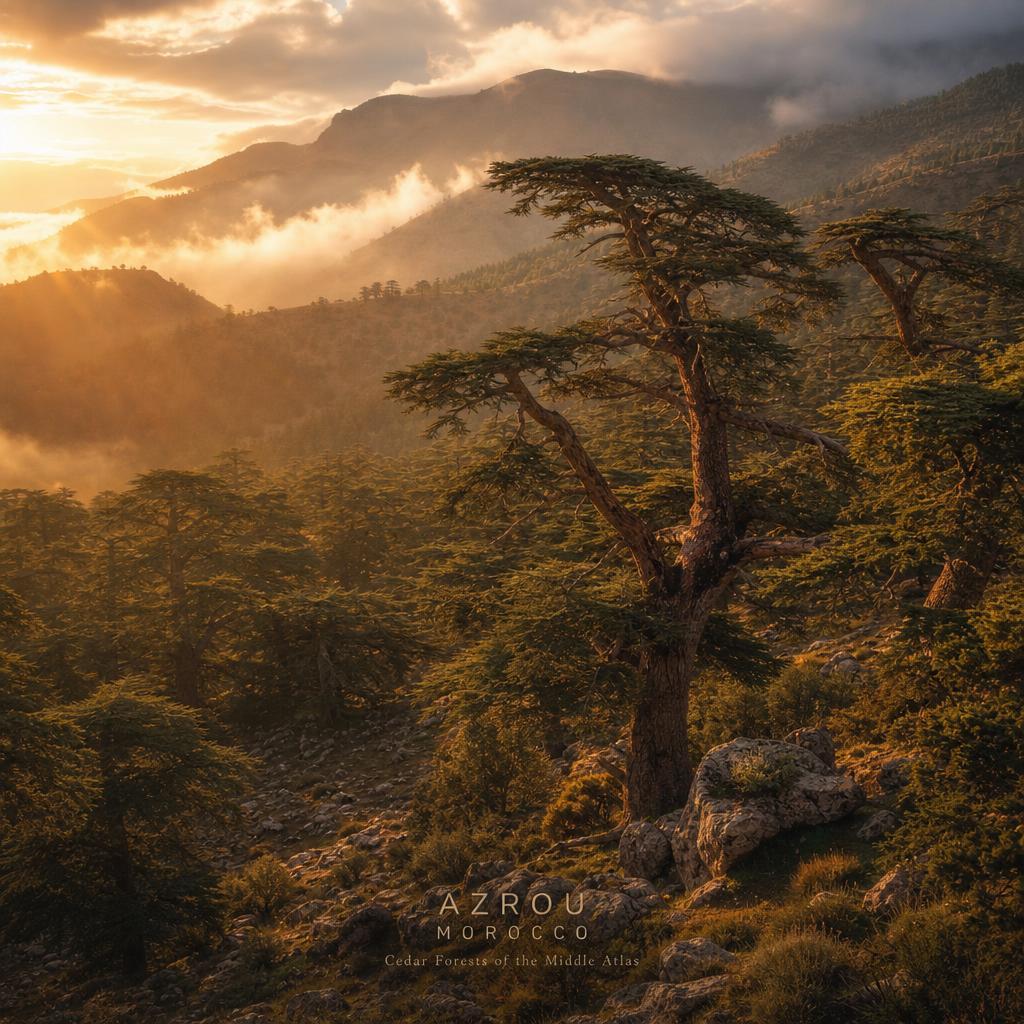
Why the Cedar Forest Is a Good Place to Start Hiking
Many of the paths through the Azrou cedar forest are genuinely flat, wide, and shaded — a combination that removes most of the technical challenges that make mountain walking intimidating for beginners. The canopy provides shade from direct sun in summer, the soft packed-earth surface is forgiving on joints, and the density of the forest means you are never far from reference points. Orientation is straightforward on the main routes, and the proximity to Azrou town means that shortening a walk is always easy.
The forest environment is also naturally compelling in a way that makes the physical activity feel secondary. There is enough to notice — cedar bark textures, bird sounds, light through the canopy, occasional wildlife movement — that the experience of being in the forest carries the walk forward without requiring sustained effort of will. Many first-time hikers are surprised by how far they have walked when they reach a natural stopping point in the forest.
What to Expect on Your First Forest Walk
A guided beginner walk from Azrou into the cedar forest typically starts on a gentle path that enters the trees within fifteen to twenty minutes of departing town. The pace is set by the slowest member of the group, with natural pauses at interesting trees, viewpoints, and wildlife observation spots. There is no obligation to reach any particular destination — the forest itself is the experience, not a summit or endpoint.
The main things that surprise beginner hikers on the cedar forest trails: the altitude makes the air feel slightly thinner than at sea level, which means the effort of even gentle uphill sections is slightly more noticeable than expected. This is normal and adapts quickly. Second, distances feel shorter than they are because the visual variety keeps attention occupied — this is a feature, not a concern, but it means staying aware of time and energy levels rather than just following the trail indefinitely.
Building Confidence from Easy to Moderate
A natural progression for first-time hikers visiting Azrou over several days might start with a two-hour flat forest loop on day one, extend to a three- or four-hour route with gentle ascent on day two, and consider the full cedar forest hike or a shorter waterfall route on day three. This progression allows the body to adapt to altitude and terrain change, and it builds route-reading and pacing awareness gradually rather than demanding it all on the first outing.
Identifying your personal comfortable pace — a speed at which you can walk and hold a normal conversation without becoming breathless — is one of the most useful things a beginner hiker can do early in the learning process. Hiking faster than this pace on ascents leads to rapid fatigue, overheating, and a less enjoyable experience. Walking at a pace that feels almost too slow on flat ground is often exactly right for sustained mountain terrain.
- Day 1 suggestion: 2-hour flat cedar forest loop with a guide
- Day 2 suggestion: 3–4 hour route with gentle ascent, more distance
- Day 3 suggestion: full cedar forest hike or entry-level waterfall walk
- Pace test: if you cannot hold a normal conversation, slow down
- Altitude at Azrou is ~1,500m — more noticeable than it sounds at sea level
Simple Gear for a Beginner's First Hike Near Azrou
A beginner hiker near Azrou needs very little special equipment to have a great first experience. Closed-toe shoes with a non-slip sole, comfortable trousers or walking leggings, a t-shirt with a light layer to add, a hat, sunscreen, and at least two litres of water per person cover the basics for a half-day flat forest walk. You do not need specialist hiking gear for an entry-level cedar forest walk — the gear requirement increases with the difficulty and duration of the route, not with being in a national forest per se.
The one item that beginner hikers most consistently wish they had brought is more water. The second is a light layer — the forest is cool in the morning and the temperature drop when you stop moving is more noticeable than expected. Neither of these requires a specialist outdoor retailer: a reusable bottle filled before you leave and a light fleece or zip-up jacket from your regular wardrobe are entirely sufficient.