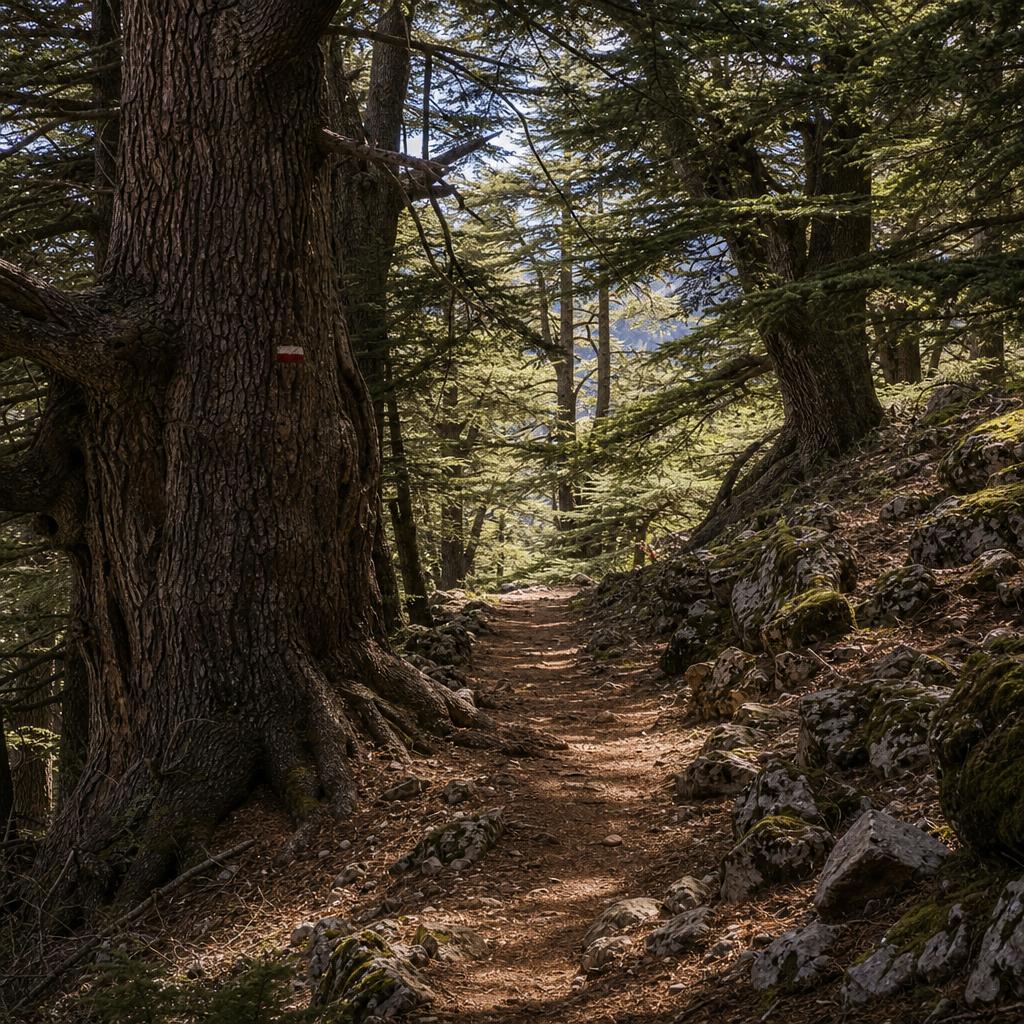
The Turnaround Decision: Why It Matters in the Middle Atlas
The Middle Atlas near Azrou is not extreme alpine terrain, but it contains enough variable elements — rapid weather shifts, trail surfaces that change significantly with rain, limited emergency infrastructure in remote sections, and afternoon light windows — that poor turnaround decisions create genuine problems. The consequences of a late decision to turn back range from a stressful descent in fading light to more serious situations in deteriorating weather. The majority of mountain rescue situations worldwide, including in the Atlas ranges, involve hikers who continued beyond a clear decision point rather than those who turned back too early.
The core principle is simple: the decision to turn around becomes harder the further you go, because the psychological investment in continuing grows with each step forward. This is the reason turnaround decisions should be made against predetermined criteria — time, weather threshold, energy level, or a specific terrain condition — rather than by feel in the moment. Setting these criteria with your guide before you depart gives you both a clear framework that removes the emotional difficulty from the decision.
Weather Conditions That Should Trigger an Immediate Turnaround
Rapidly developing thunderstorms are the clearest turnaround trigger in the Middle Atlas. Lightning on exposed ridgelines is a genuine danger, and the time between the first distant thunder and overhead storm activity can be short in mountain environments. If you hear thunder while on an exposed section, do not wait to assess — begin descending toward tree cover and lower ground immediately. The cedar forest provides better shelter than open ridgeline and offers a safer position to wait out a storm if needed.
Thickening fog or cloud descending rapidly onto your route is the second significant weather signal. On a familiar forest path, moderate fog may be manageable; on an unfamiliar mountain route or a section with off-trail navigation, fog significantly increases the risk of disorientation. Do not assume that cloud will lift in the next thirty minutes. Your guide will make the call on fog conditions, but if you are hiking in an unguided capacity, the appearance of thick cloud on your route is a strong signal to reverse while you can still clearly see the path behind you.
- Thunder audible from any distance while on an exposed section: turn around immediately
- Lightning visible in your general direction: move to lower ground and forest cover now
- Thick fog descending onto your route: reverse before visibility is compromised
- Heavy rain beginning on a route with off-trail or creek-crossing sections: reassess immediately
- Verify the weather forecast the morning of your hike, not the night before
Personal Energy, Time, and the One-Third Rule
The one-third rule is a simple and effective energy management principle for mountain hiking: use one-third of your energy getting out, one-third getting back, and keep one-third in reserve for the unexpected. On a route that takes three hours to reach a destination, you should plan to spend roughly the same time returning — do not assume the return is always faster. Descents on loose terrain are often slower than ascents. If you reach your planned turnaround time with less energy than the one-third reserve, turn around regardless of how close the destination appears.
Time of day is a concrete turnaround criterion that is easier to honour than energy estimation. Set a specific turnaround time with your guide before departure — for example, 'we turn around by 1pm regardless of where we are on the route.' The temptation to push past this point is strongest when you are close to a destination, which is exactly when the decision is most likely to create a problem. A turnaround time set in advance is far more reliable than a turnaround time set in the moment.
Recognising Personal Warning Signs Before They Become Emergencies
Physical and cognitive warning signs that merit a turnaround or a rest-and-reassess stop include: persistent dizziness or lightheadedness that doesn't resolve after drinking water and resting; cramp or sharp pain in a joint or muscle; unsteady footing that persists after a rest break; unusual emotional responses like irritability or unusual anxiety, which can signal early exhaustion or mild altitude effects; and confusion about the route or time. None of these symptoms should be pushed through in the hope they will resolve with movement.
Communicating honestly with your guide — or with your hiking partner if unguided — is the safety mechanism that catches problems before they escalate. The barrier to communicating a concern on the trail is almost always social rather than practical: people hesitate to say they are struggling because they do not want to slow the group or admit difficulty. But a problem that is communicated early is a logistical adjustment; a problem communicated late is an emergency. Building a group culture of regular check-ins — 'how is everyone feeling?' at each rest stop — normalises honesty and removes that barrier.