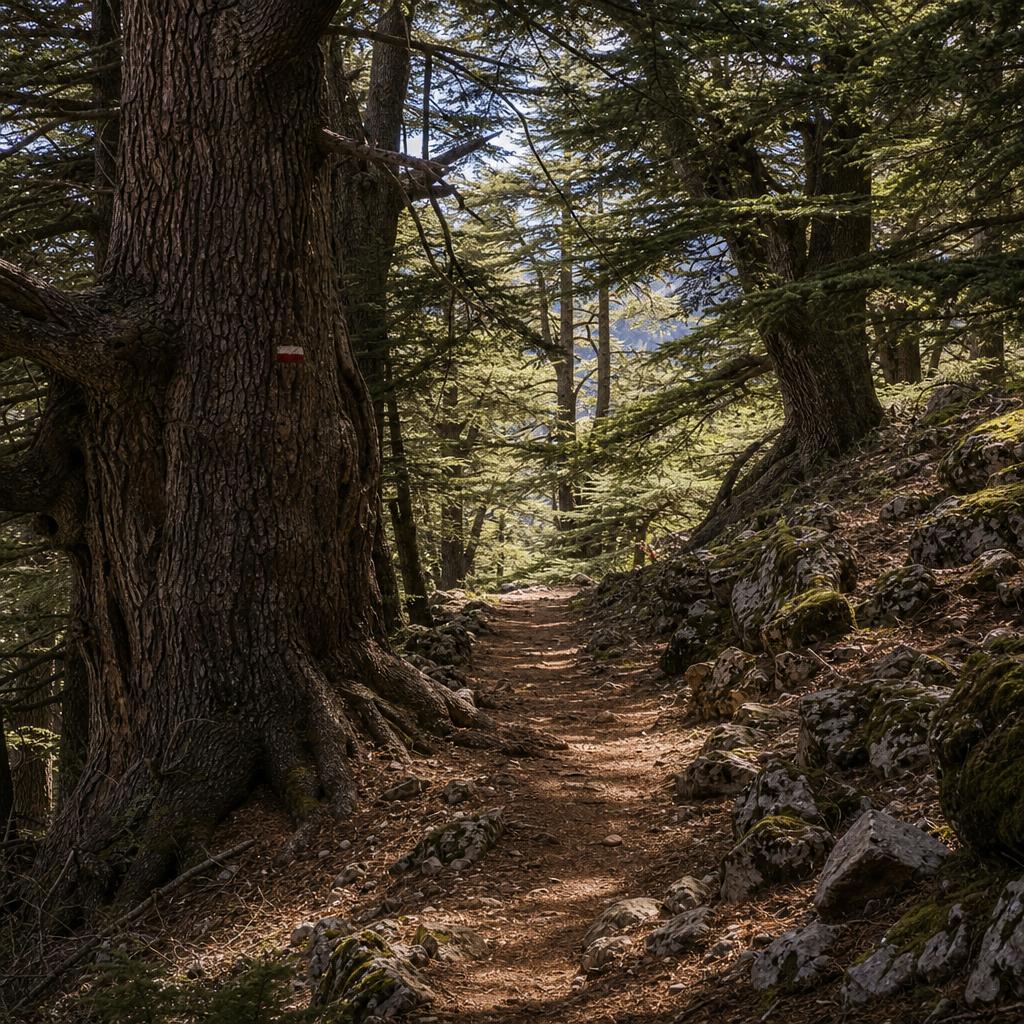
What the Ground Actually Looks Like in the Azrou Forest
Most of the cedar forest trails near Azrou begin on compacted dirt tracks that are smooth and easy underfoot. These sections reward any closed shoe with a flat sole. Further into the forest, however, the terrain shifts: exposed cedar roots cross the path, loose stones appear on steeper climbs, and seasonal water crossing points add slippery mud to the mix. On the waterfall routes in particular, the ground near cascades can be wet and uneven for extended stretches.
The variation across a single day hike means your footwear needs to handle more than one type of surface. A shoe that performs well on smooth track may slide on root-covered slopes, and a shoe chosen only for dry conditions can become a liability after overnight rain. Knowing the range of terrain before you pack helps you make a choice you won't regret mid-trail.
- Packed dirt: most of the main cedar routes
- Loose stone and gravel: common on ascents above the treeline
- Exposed roots: frequent in old-growth cedar sections
- Muddy creek banks: seasonal, most common after spring rain and in winter
- Wet rock near waterfalls: requires grip and ankle awareness
Ankle Support, Grip, and Waterproofing: What Matters Most
For most visitors doing a half-day or full-day cedar forest hike, a low-cut trail runner with a rubber lug sole provides enough grip for packed trails and gentle ascents. Mid-cut hiking boots offer more ankle support and are worth considering if you plan to do the waterfall trek, a longer mountain loop, or you have a history of ankle sprains. High-cut mountaineering boots are unnecessary on any of the standard routes near Azrou and add weight without benefit. Verify current trail conditions with your guide before departure, as conditions change seasonally.
A waterproof or water-resistant membrane (such as Gore-Tex or similar) is genuinely useful if you are visiting between October and April or if rain is forecast. In dry summer conditions a breathable non-waterproof shoe is often more comfortable, as waterproof liners trap heat. The single most important feature across all seasons is grip: a smooth-soled sneaker, slip-on shoe, or sandal lacks the traction needed to manage wet roots or loose scree safely.
Sandals, Sneakers, and What to Leave at the Hotel
Flip-flops and open sandals are not suitable for forest or mountain trails near Azrou. They offer no lateral support, no grip on uneven ground, and leave the foot exposed to root catches and stone bruises. Standard canvas sneakers with smooth rubber soles are likewise a poor choice for anything beyond the flat, paved edge of the forest: they lack the lug pattern needed for grip and provide no ankle protection. If these are the only shoes you have, let your guide know so they can choose the flattest and most forgiving section of trail for your group.
Sports sandals with heel straps and grippy soles (the type designed for canyon hiking or river trails) sit in a middle ground. They handle dry, flat terrain well and are comfortable in summer heat, but they expose the ankle and top of the foot on rocky or muddy ground. If you bring them as a backup for short, flat walks near Azrou town, that is fine; they are not the primary choice for a full forest hike.
Caring for Your Feet on a Multi-Terrain Mountain Day
Moisture management matters as much as shoe selection. Merino wool or synthetic hiking socks wick sweat away and reduce blister risk compared to cotton socks, which stay wet and bunch. Carry a spare pair of socks on full-day outings; a dry sock change at midday can transform the second half of a walk. If you feel a hot spot forming early on the trail, stop and address it before it becomes a blister — a small piece of blister tape or moleskin is worth adding to your daypack.
After a rainy or creek-crossing day, allow wet shoes to dry fully before the next outing. Stuff them loosely with dry paper or a shoe tree rather than placing them near a direct heat source, which can warp soles and crack leather. Checking your footwear the evening before rather than the morning of a hike gives you time to dry, re-lace, or resolve any small issues without stress.
- Pack merino or synthetic socks, not cotton
- Carry blister tape or moleskin for multi-hour walks
- Dry wet shoes slowly, away from direct heat
- Check laces and insoles the evening before your hike