What the Cedar Forest Provides
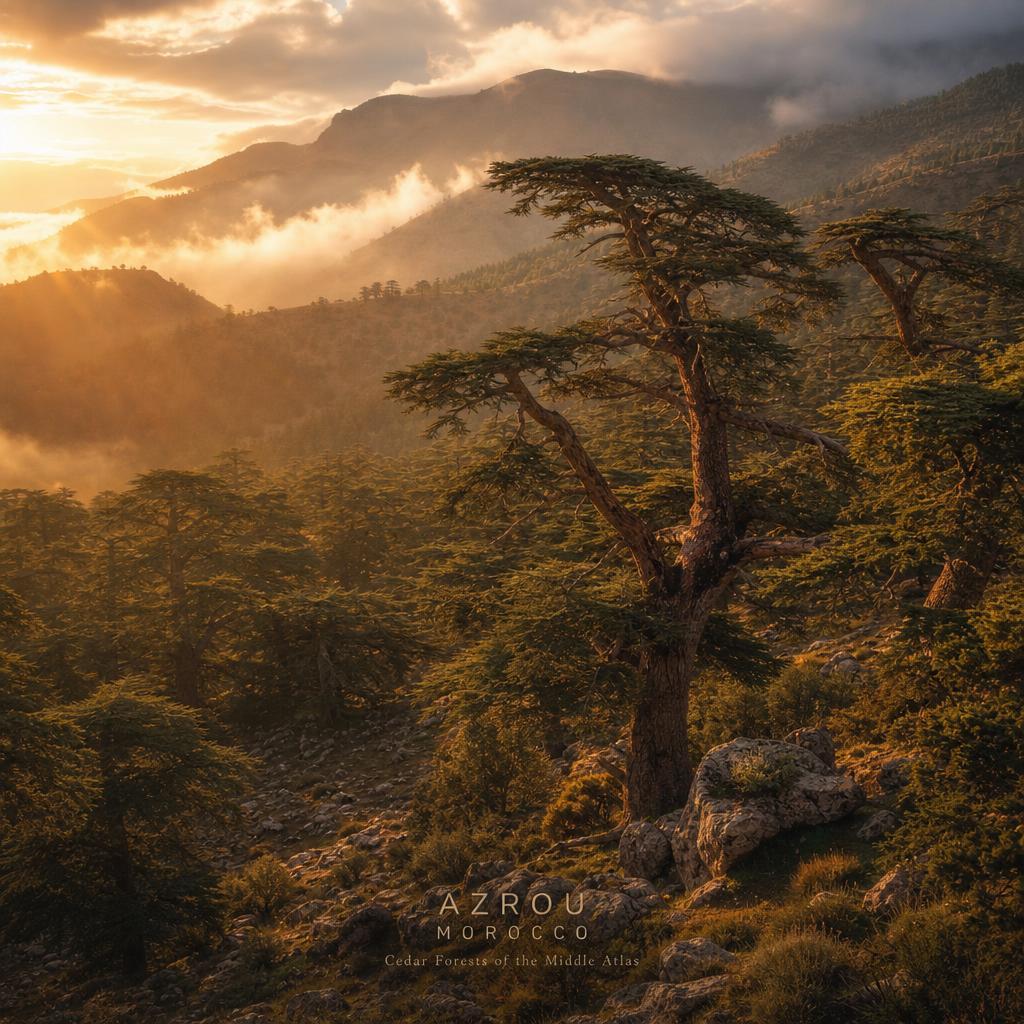
The Atlas cedar (Cedrus atlantica) forest of the Middle Atlas is the core habitat for Barbary macaques in Morocco. These forests sit at elevations roughly between 1,400 and 2,200 metres, creating a cool, high-altitude environment distinct from the hot lowlands below. For macaques, the cedar forest is a multi-layered food source: bark cambium and sap are consumed by stripping the outer bark, particularly in winter when other food is scarce; insects live in decaying wood and under loose bark; fungi grow on the forest floor after rain; acorns, seeds, and berries are seasonal staples.
The dense, multi-storey structure of a mature cedar forest also provides shelter and vertical escape routes. Macaques are equally comfortable on the forest floor and thirty metres up in the canopy, and their ability to move rapidly between levels is a primary anti-predator strategy. A fragmented or degraded forest, where the canopy has gaps and old trees have been removed, loses much of this protective architecture.
Threats Facing the Cedar Forest Ecosystem
The cedar forests of the Middle Atlas face significant pressure from several directions. Overgrazing by livestock — particularly in areas where traditional herding patterns have intensified — reduces forest floor plant cover and degrades the understory that macaques depend on for foraging and shelter. Climate change is altering precipitation patterns across the Atlas mountains, affecting tree regeneration and the timing of fruiting and flowering that macaques time their energy cycles around.
Bark stripping by macaques themselves, particularly in winter when other food is scarce, can damage or kill individual trees in concentrated areas — a pattern that may be exacerbated by habitat fragmentation that forces higher animal densities into smaller forest patches. The health of the macaque population and the health of the forest are genuinely interdependent: neither can flourish without the other.
The Forest Floor: A World Below the Canopy
Most visitors look up at the cedar canopy, but the forest floor is equally rich. Macaques spend considerable time foraging at ground level, flipping rocks and pieces of bark, digging for bulbs, and following damp gullies where invertebrate life is densest after rain. The forest floor also records activity: a careful observer can spot the scuffed earth and displaced stones left by ground-foraging, the gnawed remains of pine cones piled at tree bases, and the occasional print in soft mud.
Forest floor plants — including ferns, mosses, wild herbs and seedling cedars — are indicators of ecosystem health. Areas with dense, diverse ground vegetation indicate relatively low grazing pressure and good soil moisture. Areas where the ground is bare and compacted tell a different story. These differences are visible on a single morning walk and give context to everything else you observe.
- Cedar bark: a key winter food source for macaques
- Forest floor fungi and invertebrates: important year-round foraging
- Old, dead wood: shelter and food source for insects that macaques seek
- Dense understory vegetation: protection from ground-level predators
- Seasonal acorns and berries: energy-rich food in autumn and early winter
Walking as a Participant in the Ecosystem
A guided walk through the cedar forest is not simply wildlife tourism — it is an opportunity to understand an ecosystem with enough complexity to reward repeated visits over a lifetime. A guide familiar with the forest can show you the marks of macaque activity, explain the relationship between tree age, bark texture and food availability, and point out which parts of the forest are under most pressure. This knowledge makes the animals you eventually see comprehensible rather than just spectacular.
Staying on trails, not removing anything from the forest, and avoiding loud noise are basic contributions visitors can make to the integrity of the ecosystem. The cedar forest is not a managed wildlife park — it is a living landscape with its own rhythms, pressures and uncertainties. Walking through it with respect means acknowledging that you are a guest.