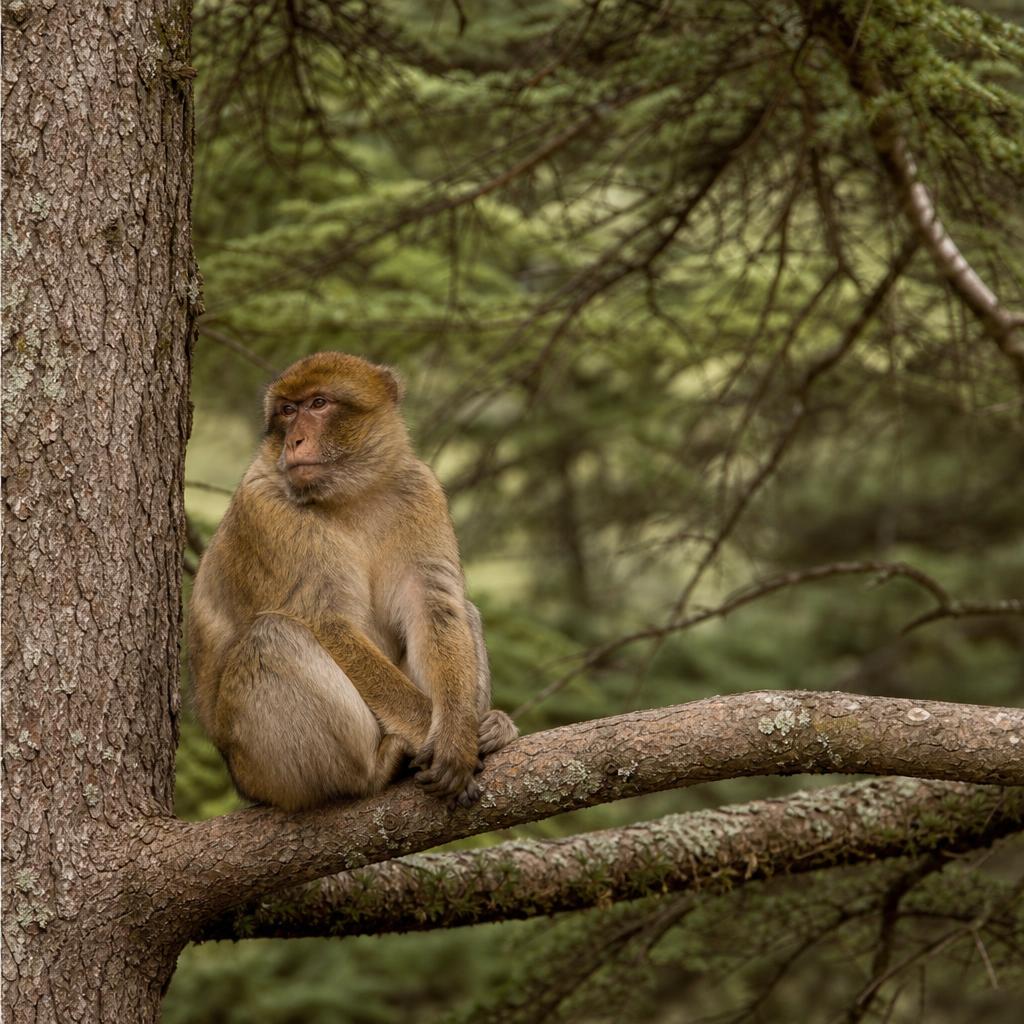
Signals of a Calm, Undisturbed Troop
A troop going about its daily life — neither alarmed nor artificially stimulated by food provisioning — presents a particular character. Movement is unhurried and purposeful. Animals forage methodically, moving along branches and through leaf litter in deliberate patterns. Grooming, which is both a social bond and a practical hygiene behaviour, takes place in pairs or small clusters, often in sunny patches. Infants play and wrestle near adults who watch intermittently without apparent anxiety.
Calm vocalisations are soft and intermittent — short, quiet contact calls that help troop members maintain awareness of each other's position without the urgency of alarm signals. If the forest around a troop is quiet and the animals are moving at ground level or in the lower canopy with relaxed posture, you are watching animals in an undisturbed state. This is the condition you want to maintain throughout your visit.
Signs of Curiosity Versus Signs of Stress
Curiosity and stress can look superficially similar — both involve attention directed at you — but there are differences. A curious macaque will orient toward you, perhaps tilt its head, and hold the gaze briefly before returning to what it was doing. Its posture stays relaxed: weight balanced, fur smooth, jaw closed. Stress signals are more persistent: fixed, wide-eyed staring; fur standing slightly on end; a tense, hunched or upright body posture; and — most clearly — the lipsmack-and-yawn threat display that shows the full dental array.
Rapid, repetitive movement — the short lunging steps sometimes called 'bouncing' — signals escalating agitation and is a clear instruction to increase your distance immediately. So is a loud, sharp bark or series of rapid calls. These are not sounds of excitement; they are requests for more space. Responding promptly by stepping back quietly — rather than freezing in place — is the appropriate action.
Group Behaviour and Dominance Signals
Macaques are complex social primates with clearly defined hierarchies. Understanding a few broad patterns helps you interpret what you are seeing. Adult males sometimes perform exaggerated displays — chasing, branch-shaking, vocalising — which can appear alarming but are usually directed at other troop members rather than at human observers. Remaining calm, still, and at a distance during these events is the right response.
Watch for how the troop responds to a particular individual's movements. If one animal raises an alarm call and others immediately look up or begin moving, there may be a predator above — scan the sky, as eagles and other raptors pass through the cedar forest. If the alarm seems to be oriented toward your group, your guide will know whether to hold position or quietly move the group away.
- Relaxed grooming and foraging: troop is calm
- Brief, directed gaze then return to activity: normal curiosity
- Sustained fixed staring, raised fur: early stress signal
- Teeth-baring yawn toward you: clear warning — increase distance
- Rapid bouncing steps or loud barking: agitation — back away calmly
- Alarm calls followed by upward gaze from troop: possible aerial predator
How Reading Behaviour Makes You a Better Observer
Visitors who understand basic macaque signals stop relying on a guide to police their behaviour and start self-correcting instinctively. When you see that a particular animal's posture has shifted from relaxed to alert, you back up slightly without being told. When you notice the direction the troop is moving, you position yourself where they will pass rather than following behind them. This kind of informed watching produces richer observations and makes you a less disruptive presence in the forest.
It also makes the visit more personally rewarding. Recognising that a particular interchange between two juveniles is play-fighting rather than aggression, or that an adult male's approach to a mother and infant is a social bonding behaviour rather than anything threatening, transforms raw observation into genuine understanding. Wildlife encounters at this level of engagement tend to be the ones that people remember for years.