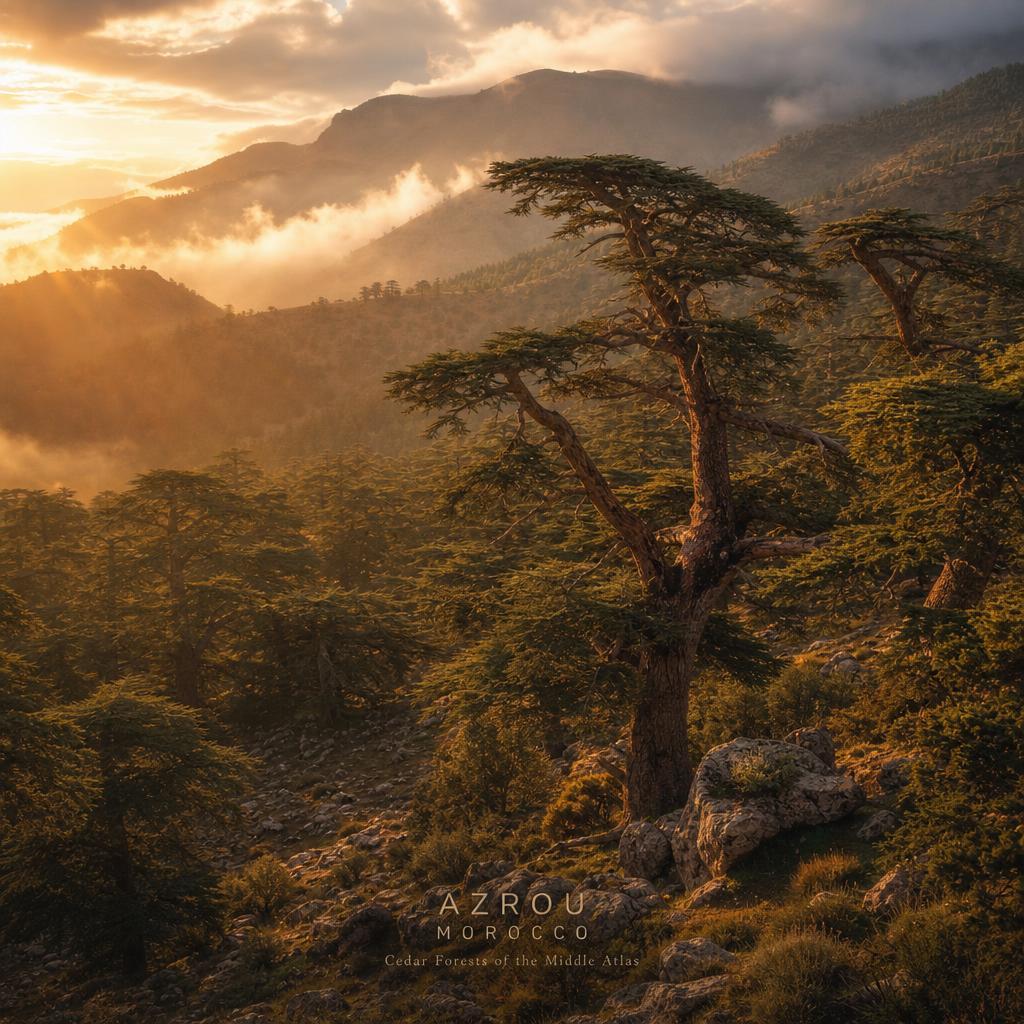
How Rain Changes the Cedar Forest Environment
A cedar forest walk in light rain offers a genuinely different version of the landscape. The canopy limits how much rain actually reaches the forest floor in moderate showers, the air carries a clean resinous smell, and the contrast between wet bark and green undergrowth is visually distinct from a dry-day walk. Wildlife movement can increase in cooler, quieter post-rain conditions. For photographers and those who prefer a quieter trail, an overcast or light-rain day is sometimes preferable to a busy summer afternoon.
Heavy or persistent rain changes the equation significantly. Packed-earth trails that feel firm and grippy when dry become slippery clay surfaces after sustained rainfall. Exposed root networks transform into genuinely hazardous surfaces. Creek crossings — particularly on the waterfall routes — can become impassable or dangerous if water levels rise quickly. These are the conditions under which trail plans should be revised, and your guide is the right person to make that call based on local knowledge of how the terrain responds.
Dressing Effectively for Wet Middle Atlas Conditions
The rain gear that actually works in mountain conditions is a breathable waterproof jacket — one with sealed seams and a hood that fits over a hat or helmet. A cheap non-breathable plastic poncho keeps the rain out but traps body heat and sweat against your skin, which causes rapid chilling when you slow down or stop. The ideal approach is a packable breathable shell (2.5 or 3-layer construction) over a base layer that wicks moisture away from your skin. Leave the cotton base layers at the hotel on wet days; they hold moisture and lose all insulating value when damp.
Waterproof or water-resistant trousers matter more than most people expect on a wet forest trail, where brush and low vegetation deposit water onto exposed legs quickly. Even lightweight rain trousers make a significant difference in comfort over a three-hour walk. Gaiters are worth adding on muddy routes in heavy rain — they prevent mud and water from entering the top of your boot, which is often more of a problem than water entering through the sole itself.
- Breathable waterproof jacket with hood — essential, not optional
- Moisture-wicking base layer (synthetic or merino, not cotton)
- Waterproof or water-resistant trousers or rain trousers
- Waterproof or Gore-Tex footwear — more important than usual in wet conditions
- Gaiters — useful on muddy trails in sustained rainfall
- Dry bag or rain cover for your daypack
Which Routes Are Safe (and Which to Avoid) in Rain
The flat and lower-elevation cedar forest paths on the edge of Azrou are the most robust options in wet weather. They are wide enough to avoid most low-vegetation dripping, better drained than narrow mountain paths, and close enough to town that turning back is straightforward if conditions worsen. These routes remain enjoyable in light to moderate rain and are the sensible default for a wet-weather forest walk.
The waterfall trek and any route with significant off-trail sections should be treated with caution in rain, and skipped entirely during or immediately after heavy downpours. These routes involve the stream and creek crossings that respond most dramatically to precipitation, and the steeper sections become significantly more difficult to descend safely when wet. Your guide will not attempt hazardous routes in unsafe conditions — this is always the right call, regardless of schedule pressure.
Making the Most of a Wet-Weather Forest Day
A rainy day in Azrou is not wasted. The cedar forest in mist and low cloud is a different kind of beautiful — atmospheric, close, and free from summer crowds. If the rain is light and your gear is adequate, the shorter forest loops make for a memorable walk. If it is heavy, a morning in Azrou itself — the covered market, a tea house, a look at Amazigh craft shops — before an afternoon forest walk when conditions improve is a perfectly good way to organise the day.
Inform your guide of the current conditions from your accommodation and ask for a realistic assessment of what is currently safe. Local knowledge about how the specific trails drain and how rapidly conditions change after rain is not something you can get from an app or a travel website. Building in some flexibility in your schedule so that a rained-out hiking morning can be rescheduled to the following day is the most practical approach if your itinerary allows it.