Why the Cedar Forest Needs Careful Visitors
The Middle Atlas cedar forest around Azrou is one of the largest remaining cedar ecosystems in North Africa. Ancient trees that took centuries to reach their current size share the forest floor with mosses, wildflowers, fungi, birds, and Barbary macaques. Compacted soil from foot traffic, trampled understorey plants, and litter left near water sources can quietly degrade this habitat over time — often in ways visitors do not notice until the damage is already done.
Leave-no-trace principles were developed for exactly this kind of environment: places that appear resilient but carry long-term sensitivity beneath the surface. Applying them in the Azrou cedar forest does not require specialist training. It means staying on established paths, carrying out everything you bring in, and leaving plants, rocks, and fallen wood where you find them. These are small commitments with an outsized impact when thousands of visitors make them each year.
Pack In, Pack Out: Managing Waste in the Forest
There are no waste bins inside the forest itself. Anything you carry in — food wrappers, fruit peels, plastic bottles, tissues — should come back out with you. Organic waste such as orange peel or apple cores may seem harmless, but it attracts animals, alters feeding behavior, and can introduce pathogens to soil near sensitive root systems. Bring a small reusable bag so that waste collection never becomes an afterthought at the end of the walk.
If you need to use the toilet in the forest, follow basic wilderness etiquette: move at least 60 meters from any water source or path, dig a small hole where soil depth allows, and pack out all paper rather than leaving it on the surface. Your guide can point you toward appropriate spots away from high-traffic areas. Verify local conditions with your guide, as forest management practices and designated areas can change.
- Carry a zip-lock bag or small dry bag for litter
- Do not bury or burn waste — pack it back to town
- Avoid single-use plastic by refilling a reusable bottle before the walk
- Never leave food scraps near macaque or bird activity areas
Staying on the Path and Protecting Soil
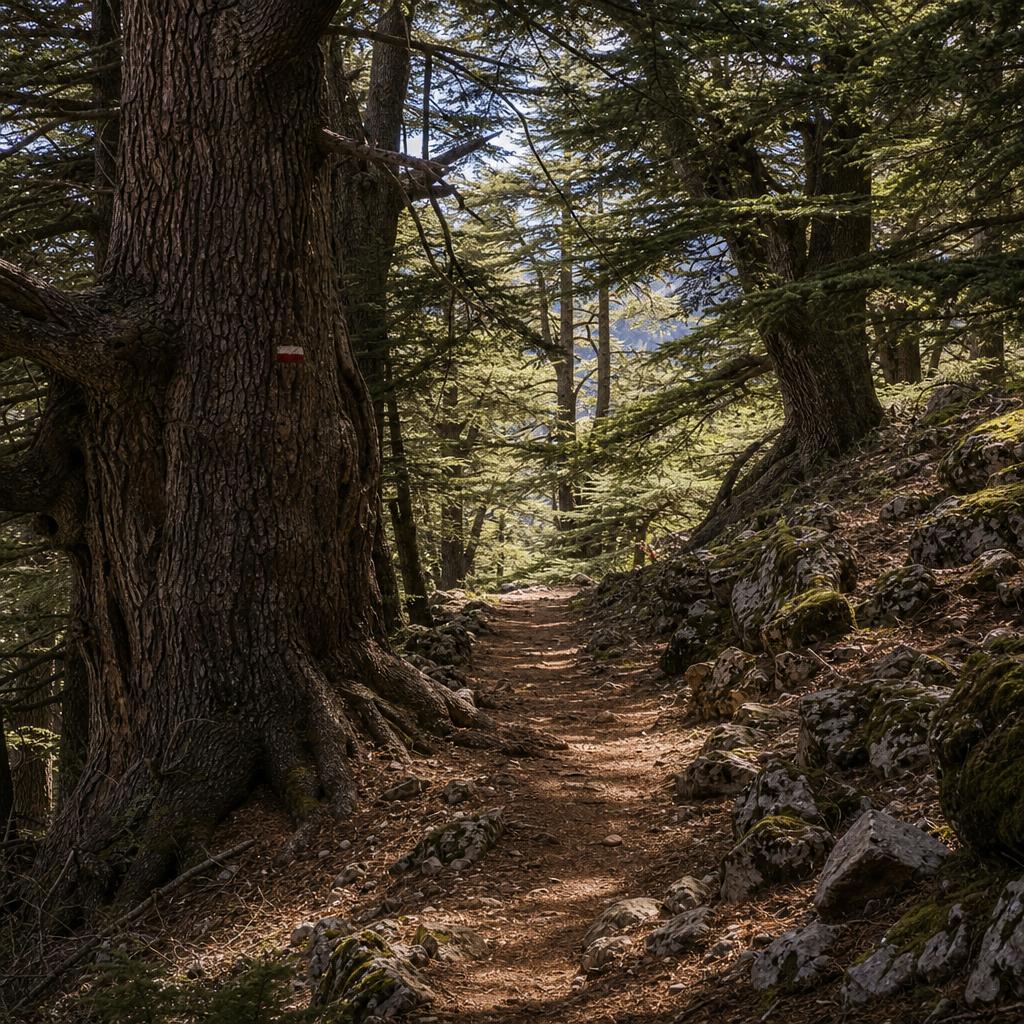
Cedar root systems are shallow and vulnerable to compaction. When walkers spread out across the forest floor to avoid a muddy patch or find a better camera angle, they gradually compact the soil around root zones and break down the fragile understorey. Staying on the established path — even when it is narrow or slightly uneven — keeps the damage contained to one corridor rather than spreading across a wider area.
Resist the urge to collect souvenirs: a loose piece of bark, a fallen cone, or a mossy stone may seem insignificant, but these materials form part of the nutrient cycle that feeds the forest. Photographs are always the better keepsake. If you are visiting with a guide, let them lead; experienced local guides know where paths are stable and which sections require particular care during wet conditions.
Sharing the Forest Responsibly with Other Users
The cedar forest is not only a travel destination. Local Amazigh communities have long-standing relationships with this landscape — for seasonal grazing, firewood collection under regulated systems, and cultural connection to the land. Travelers are guests in a shared space. Keep noise to a considerate level, give way to local people and working animals on narrow paths, and do not photograph individuals without first asking permission.
Campfires in the forest are generally not appropriate without explicit authorization, as the risk of accidental fire in a dry summer forest is significant. If you are planning an overnight extension, speak with your guide about current rules and verify any permit requirements with local authorities before arrival. Responsible travel here is ultimately about leaving the forest in the same condition — or better — than you found it.