How to Read Difficulty Ratings on Middle Atlas Trails
Difficulty ratings in the Middle Atlas reflect a combination of four factors: total distance, cumulative elevation gain, trail surface quality, and duration. An easy walk near Azrou typically means a well-defined path on relatively flat ground, under five kilometres round trip, with minimal loose stone or steep sections — suitable for most adults including those who don't hike regularly. A moderate route introduces sustained uphill sections, some rough or narrow trail, and a longer duration, generally three to five hours of walking with breaks.
The 'challenging' end of the scale in this region involves steep ascent or descent on loose terrain, off-trail navigation in places, and the physical demands of several hours at altitude. Importantly, difficulty ratings are set for average conditions. After heavy rain, a route rated 'easy' may behave more like 'moderate' due to muddy creek crossings and slippery roots, while a 'moderate' ascent can become 'challenging' in wet or cold conditions. Always confirm current trail conditions with your guide before departure.
Easy Routes: What to Expect in the Cedar Forest
Most of the guided forest walks departing from Azrou fall into the easy category: smooth packed dirt, gentle gradients, short distances, and good shade under the cedar canopy. These routes are accessible to visitors who walk regularly in daily life but don't have specific hiking experience. They are also well-suited to families with children old enough to walk independently, and to older visitors who want comfortable forest access without technical challenge.
The main thing 'easy' does not mean in this context is 'short in time'. A four-hour easy walk is still a four-hour commitment that requires water, snacks, appropriate shoes, and a degree of baseline fitness. Elevation sits between 1,400 and 1,600 metres on most easy routes — that alone can cause mild fatigue in visitors arriving from sea level, particularly on the first day.
Moderate and Challenging: Ascending into the Wider Atlas
Moderate routes near Azrou typically push into higher forest sections or connect to ridgelines above the treeline. Expect cumulative climbs of 200 to 400 metres, some loose-stone sections on steeper slopes, and durations of four to six hours including rest stops. A regular walker who exercises a few times per week — cycling, gym visits, or urban walking — will generally find moderate routes manageable if they are appropriately hydrated and carrying sufficient food. The challenge is sustained, not technical.
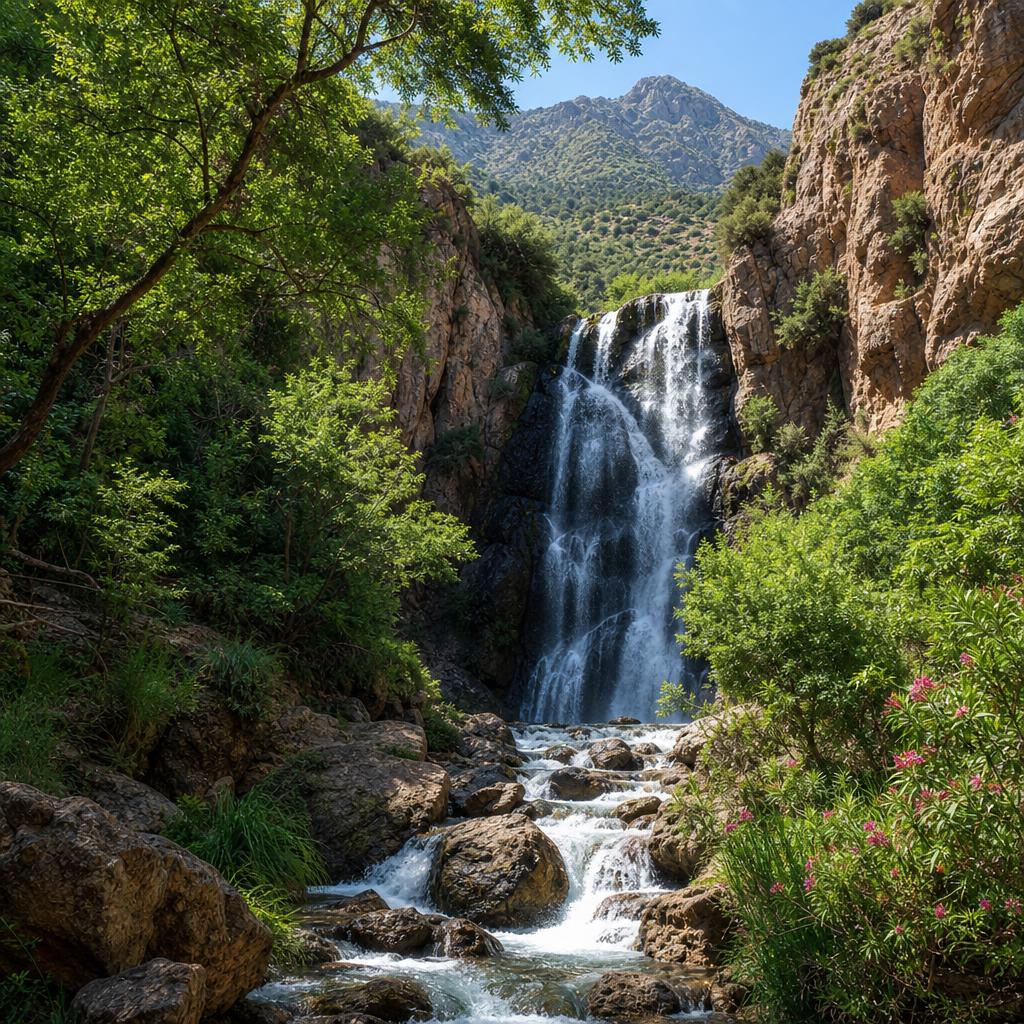
The most demanding local routes, including the full waterfall trek in its longer variants, involve rough off-trail terrain, steep descents back to the valley, and the possibility of creek crossings with no engineered bridges. These are genuinely challenging in conditions, not just graded conservatively. Previous experience on uneven mountain terrain is an advantage, and the ability to make calm decisions about footing is more important than raw fitness. Your guide will assess the route on the day and may modify the plan based on conditions or group confidence.
- Easy: flat packed trail, under 5 km, minimal elevation gain, suitable for casual walkers
- Moderate: sustained uphill, some rough terrain, 3–5 hours, suits regular walkers
- Challenging: off-trail sections, steep descent, loose stone, previous hiking experience helpful
- All ratings can shift one grade harder after significant rainfall
Matching the Route to Your Group's Realistic Fitness
The most common trail error near Azrou is overestimating fitness at altitude. Even experienced hikers who live at sea level may find their cardiovascular system working harder in the first day or two at Middle Atlas elevations. If you are arriving directly from the coast or from a long journey, an easy route on your first day is not a compromise — it is sound acclimatisation planning that sets up a better second day.
When booking, be specific and honest with your guide about the walking experience within your group. Describing the slowest walker accurately is more useful than describing the fastest. A private or small-group guide can always push the route harder for a strong group, but significantly shortening a difficult route mid-mountain when someone is struggling is a less comfortable situation for everyone. Honesty before departure makes for a better day on the trail.