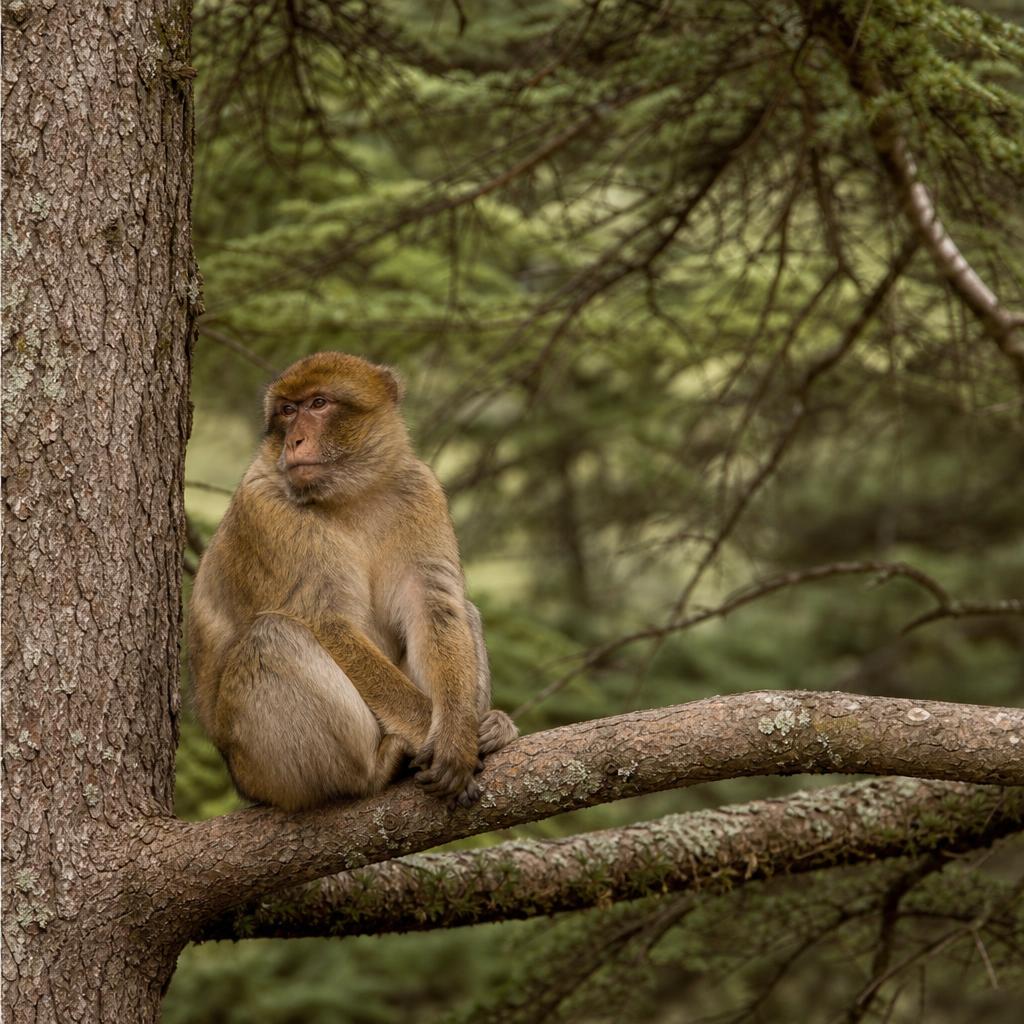
Why Macaques Approach Humans in the First Place
Wild Barbary macaques that have been exposed to visitors over years learn quickly that humans sometimes carry food. Even animals in troops that have not been formally fed will investigate newcomers for this possibility, especially juveniles, who tend to be both curious and bold. An approaching macaque is most often interested in whether you have anything edible, not in any kind of confrontation. Understanding this motivation makes the approach feel less threatening and helps you respond appropriately.
Individual macaques also approach out of social curiosity. Young animals in particular may simply be exploring — testing the edges of their world in the way that juveniles in most social species do. This is natural behaviour, but it does not mean you should encourage it by making eye contact, crouching to their level to interact, or holding out objects. Any response that rewards the approach with food or attention builds a stronger association between humans and positive outcomes.
How to Respond Calmly When an Animal Comes Close
Stand still. Sudden movement — stepping back, turning sharply, raising your arms — can trigger a chase response because it mimics the movement of prey or a fleeing subordinate animal. Once you are still, look slightly to the side rather than directly at the macaque. In primate communication, a sustained direct stare is a challenge or threat, while an averted gaze signals that you are not a competitor.
If the macaque does not divert on its own, you can slowly increase the distance by taking small, calm sideways steps — not backward steps, which macaques sometimes follow. Keep your hands visible and relaxed at your sides. If your guide is present, follow their instructions immediately; they will read the animal's posture and intent more accurately than a first-time visitor.
Protecting Your Belongings Without Creating Conflict
Macaques are dexterous and persistent with interesting-looking objects. Before entering the forest, zip or buckle every pocket and compartment of your bag. Loose items clipped to the outside — water bottles, sunglasses cases, lens caps — are easily removed. If a macaque has already grabbed a bag strap or is investigating your pack, the safest response is to stay calm, avoid a tug-of-war, and wait. Most animals lose interest quickly when there is nothing edible inside.
Sunglasses are a particularly common target in forests where macaques have had many visitor interactions. Keep them on your face or in a closed pocket rather than pushed up on your head where they are easily reached. The same applies to hats with soft, graspable brims. Keeping your appearance as free of grabbable projections as possible is a simple precaution.
- Zip all bag compartments before entering the forest
- Keep sunglasses on your face, not on your head
- Do not clip water bottles or items to the outside of your pack
- If a macaque takes an item, do not chase — report to your guide
- Never create a tug-of-war over a bag or clothing
If the Moment Escalates: Reading Stress Signals
Macaques communicate distress through recognisable signals. A wide yawn showing teeth is not friendliness — it is a warning. Rapid lip-smacking can signal tension in some contexts. A macaque that is grimacing, vocalising loudly, or making short lunging movements is agitated and needs more space. Increase your distance smoothly and without turning your back fully on the animal. Call quietly to your group to move with you.
Bites are rare when visitors behave appropriately and follow guide instructions, but they do occur, mainly when someone attempts to handle, grab, or restrain an animal. If you or a member of your group is bitten, clean the wound thoroughly with soap and water immediately and seek medical advice promptly. Verify current health guidance relevant to your region before travel, as recommendations can change.