What Happens When Macaques Are Fed by Visitors
When wild Barbary macaques receive food from humans, their behaviour shifts in ways that are hard to reverse. They learn to associate people with easy calories, which draws them toward roads and parking areas rather than keeping them deep in the cedar habitat where they forage naturally. This roadside conditioning dramatically increases their risk of being hit by vehicles, attacked by domestic dogs, or caught in snares set by people who view them as a nuisance rather than a protected species.
Food provisioning also alters troop social dynamics. Dominant individuals monopolise human food sources, increasing aggression within the group. Juveniles that grow up associating humans with food rewards become bolder and more likely to approach, snatch, or bite — not out of aggression, but because the association between people and food has been deeply conditioned. Once established, that behaviour is extremely difficult to extinguish.
The Health Consequences of Human Food
Macaques are opportunistic omnivores, but their natural diet in the cedar forest is carefully adapted to what the ecosystem provides: bark, buds, insects, seeds, fungi and seasonal fruit. Processed human food — bread, biscuits, peanuts, dates — introduces sugars, salt levels and preservatives their digestive systems are not designed for. Dental disease from sugar is documented in populations that receive regular food provisioning, and obesity has been observed in heavily fed troops at some Moroccan roadside stops.
There are also disease transmission risks. Many pathogens can cross between humans and macaques in both directions, and close contact at feeding events creates ideal conditions for transmission. This is a concern both for macaque welfare and for human health, particularly for children who may touch their faces after an animal has bitten or mouthed their fingers.
The Bigger Picture: Dependency and Population Pressure
Troops that become dependent on human food provisioning stop investing the same energy in natural foraging. Over time this erodes their ability to survive if the food source disappears — for example, if a popular roadside stop closes or if visitor numbers drop sharply. A population that cannot forage self-sufficiently is a vulnerable one, and that vulnerability ultimately threatens the long-term presence of macaques in the Azrou area.
There is also a displacement effect. When fed troops concentrate near roads and car parks, they vacate deeper forest areas, leaving habitat unoccupied and reducing the genetic connectivity between sub-populations. Healthy macaque populations need animals moving through the full forest range, not clustering at artificial feeding hotspots.
What You Can Do Instead
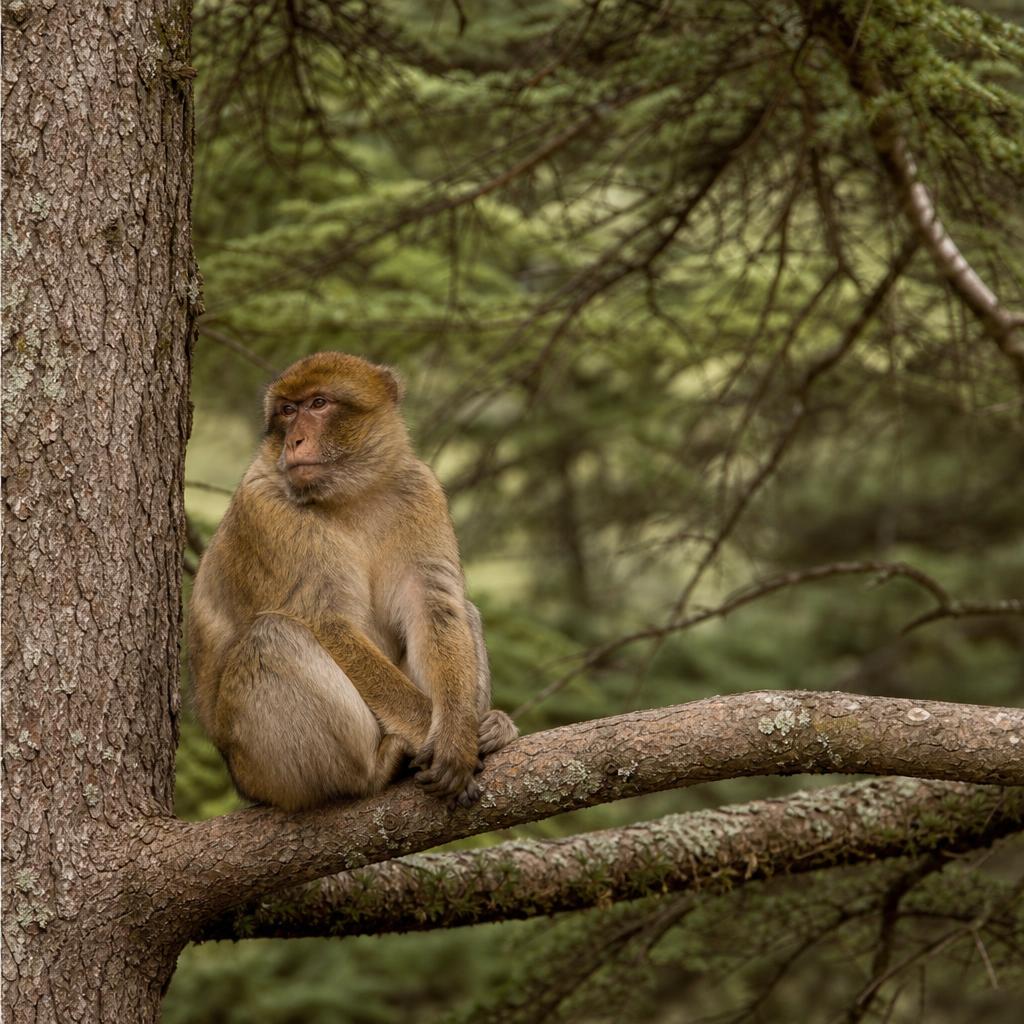
The best alternative to feeding is patient, quiet observation at a respectful distance. Watch a macaque mother groom her infant. Notice how a juvenile tests branches before committing weight. Follow the direction a foraging adult is looking to understand what the cedar canopy offers them. These behaviours are more interesting than a food-grab, and they leave the animal no worse off than before you arrived.
If you visit with a guide, ask explicitly whether they discourage feeding and whether they will intervene if other visitors in the forest start offering food. A guide who actively enforces a no-feeding norm is a more reliable choice for a responsible visit. You can also model the behaviour for other tourists nearby — a calm, quiet group at a distance sets a social standard that others often follow.
- Never offer food, even if others around you are doing so
- Store snacks in sealed, odour-proof bags inside a closed pack
- Gently explain the harm to other visitors if you see feeding happening
- Choose guides who actively enforce a no-feeding rule
- Report persistent illegal feeding to local park or forest authorities if possible