Understanding the Wildlife You Will Encounter
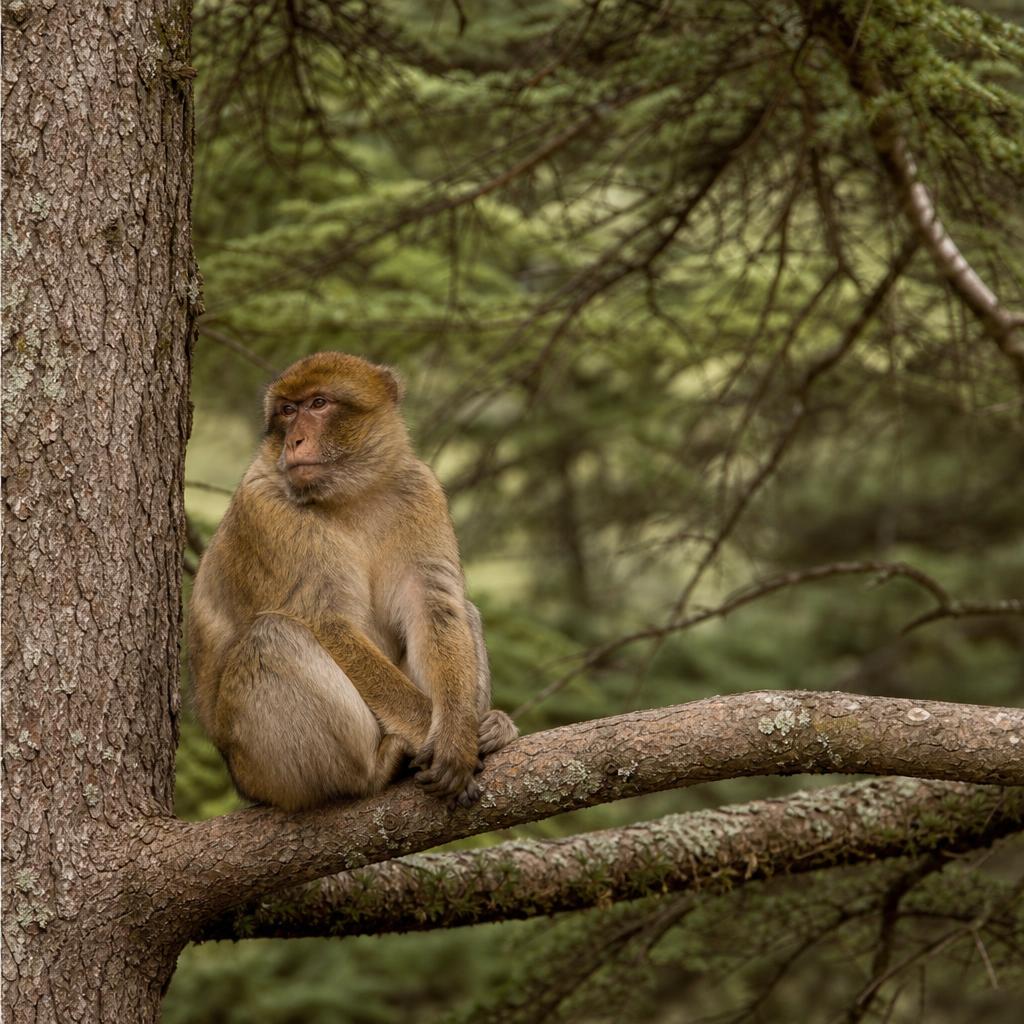
Barbary macaques — the only macaque species found outside Asia — are the most visible wildlife residents of the Azrou cedar forest. Listed as endangered, their population faces pressure from habitat loss, illegal pet trade, and the behavioral disruption caused by feeding at roadside tourist stops. In the forest, macaques live in complex social troops, forage for roots, bark, insects, and seasonal fruit, and raise their young within a tightly organized social structure that food handouts from visitors can completely undermine.
Beyond macaques, the Middle Atlas cedar forest supports Barbary red squirrels, wild boar, various raptor species, and an important population of North African birds. Even mammals and birds you may not notice — insects, fungi, small amphibians near forest streams — form part of the food web that keeps the larger species healthy. A wildlife-first approach means thinking about all of these residents, not only the most photogenic ones.
The Cardinal Rules of Ethical Wildlife Observation
The single most important rule for Barbary macaque encounters is: do not feed them. Feeding disrupts their natural foraging behavior, causes aggression between individuals competing for human food, makes macaques bold and potentially dangerous around visitors, and creates dependency on a food source that disappears when tourists leave. No photograph, no matter how close or engaging, is worth the harm that systematic feeding causes to a troop over time.
Beyond feeding, the key principles are distance, quiet, and patience. Do not chase, surround, or position yourself between a macaque and its escape route. Do not attempt to touch, pick up, or encourage a macaque to sit on you for a photograph. Do not use bait — food, sounds, or movements — to attract animals closer. A calm, stationary observer with a respectful distance will see far more natural behavior than someone who rushes forward for a close-up.
- Never feed macaques — not nuts, not fruit, nothing
- Keep a distance of at least several meters and hold your position
- Do not surround or corner an animal or cut off its path
- Never attempt to touch or hold a macaque
- Keep noise low and avoid sudden movements
- Follow your guide's instructions on approach and retreat
Choosing Tours That Prioritize Animal Wellbeing
The tour or guide you choose directly affects wildlife outcomes. Ethical wildlife tours in Azrou begin with a clear briefing before entering any area where macaques are present. They maintain group size small enough that the animals do not feel surrounded. They move slowly and quietly, read animal body language, and withdraw if the troop shows signs of stress — piloerection, alarm calls, rapid movement, or unusually tense postures. These are behaviors your guide should be trained to recognize.
Avoid any tour operator who brings food into the forest to attract macaques, who arranges for macaques to climb on guests, or who presents roadside macaque photo stops as part of the experience. These practices are harmful regardless of how they are marketed. A genuinely wildlife-first tour may result in shorter, calmer encounters — but those encounters are authentic and do not damage the troop's long-term wellbeing.
Photography Without Pressure
Photographing macaques ethically is entirely possible with a moderate telephoto lens or a camera with a good zoom range. Set up at a respectful distance, use burst mode to capture natural movement rather than trying to provoke poses, and avoid flash photography which can startle and stress animals. Your best images will come from patience and stillness — qualities that ethical wildlife viewing rewards consistently.
If you have a phone camera only, focus on the wider forest environment, behavioral groups, and context rather than individual close-ups that require proximity. Forest-scale images often tell a more complete and honest story of the habitat than a single close portrait. Bring spare batteries and memory cards, and verify equipment the night before — the forest morning is not the time for technical problems.