What the Atlas Cedar Actually Is
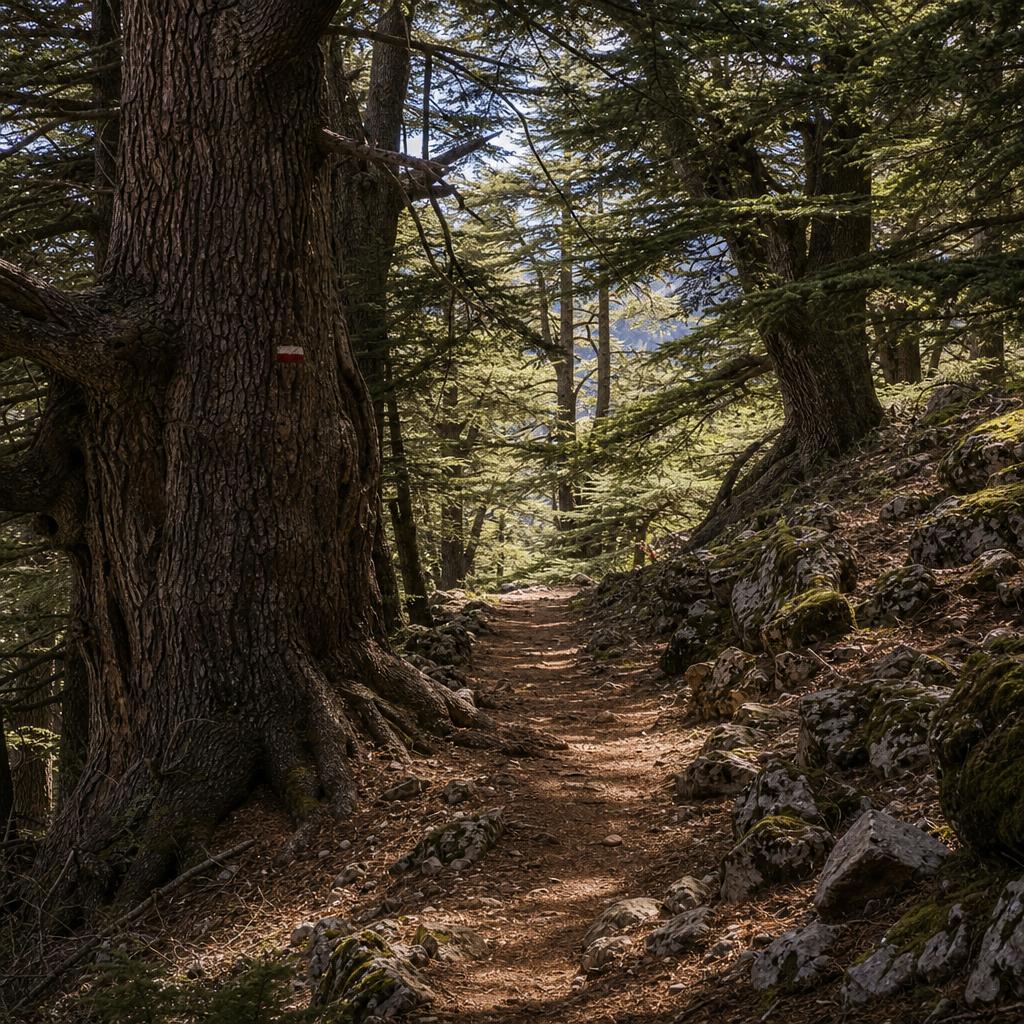
Cedrus atlantica — the Atlas cedar — is one of a small group of true cedars native to the mountains of North Africa and the Middle East. It grows naturally only in the Atlas mountain ranges of Morocco and Algeria, and in scattered isolated populations further east. In the Middle Atlas around Azrou it occurs at elevations broadly between 1,400 and 2,200 metres, where rainfall, temperature and soil conditions favour its slow, deep-rooted growth. The trees are long-lived: mature individuals may be several hundred years old, their trunks measuring two metres or more in circumference, their upper branches forming the irregular, wind-sculpted crowns visible from clearings and ridgelines.
The wood is dense, aromatic and naturally resistant to rot, qualities that made it historically valuable for construction, shipbuilding and furniture across North Africa and beyond. This historical demand contributed to centuries of gradual forest reduction. The fragrance you notice walking beneath a cedar is partly from the resin these trees produce in their heartwood — a compound that has also given Atlas cedar oil a long presence in traditional medicine and craft uses. None of this is trivial background: understanding the tree's value to human societies explains why its current conservation status is taken seriously by researchers and land managers.
How Cedars Shape the Forest Ecosystem
A mature cedar forest is not simply a collection of large trees. The canopy intercepts rainfall, slowing its passage to the soil and reducing erosion on mountain slopes. The root systems of old cedars extend deep into fractured rock, drawing up moisture and nutrients that eventually return to the surface through leaf litter and decay. Cedar duff — the thick layer of fallen needles and decomposing bark at the forest floor — supports a different community of invertebrates, fungi and small mammals than the open grassland or scrub beyond the treeline. In this sense the forest creates its own conditions: older cedars make the soil and microclimate that allow younger generations to establish.
Barbary macaques depend on the cedar forest in ways that are only partly understood. They eat cedar seeds, bark and the invertebrates that live in the canopy, and they move between cedar and oak zones depending on season and food availability. The atlas cedar forest also supports nesting populations of several raptors and specialist woodland birds whose presence indicates forest health. When forest cover shrinks or fragments, these species lose not just shelter but the functional relationships — food chains, nesting microhabitats, movement corridors — that a healthy canopy provides.
The Pressures the Forest Faces
Several intersecting pressures affect the Azrou cedar forest today. Climate change is shifting precipitation patterns across the Middle Atlas, reducing snowpack and extending dry-season drought stress on a species adapted to reliable mountain moisture. Overgrazing by livestock — particularly when herds access regeneration zones — prevents young cedars from establishing, creating what forest ecologists call a 'missing cohort' problem: the current mature trees have no replacement generation growing beneath them in some areas. This is visible on the ground if you know what to look for: open areas beneath the canopy where young trees would ordinarily be emerging.
Bark beetle pressure, which intensifies when trees are drought-stressed, has caused visible dieback in parts of the Middle Atlas over recent decades. Satellite surveys have documented canopy loss at a scale that draws researchers and policymakers, though active restoration and protection programmes are in place — their effectiveness is monitored and debated. As a visitor you are entering a forest that is simultaneously an ancient, resilient landscape and one under genuine modern strain. That duality is part of what makes the cedar forest worth understanding, not just photographing.
- Do not light fires in or near the forest — fire risk increases significantly in dry summer months
- Stay on paths to avoid compacting soil around root zones of mature trees
- Do not collect bark, seed cones or branches — even small-scale gathering adds up across many visitors
- Support responsible tourism businesses that demonstrate genuine environmental awareness
Reading the Forest with Informed Eyes
When you walk in the cedar forest with even a basic ecological understanding, the landscape becomes legible in new ways. A large dead snag standing in a clearing is not a sign of neglect — it is wildlife habitat, a nest site, a slow return of nutrients to the soil. A dense thicket of young holm oak at the forest edge tells you about grazing pressure and how the two species compete on drier, lower slopes. Pale patches of resin on a trunk suggest bark beetle activity. None of these observations require specialist training; they require only the willingness to look before moving on.
A good local guide can translate these signs for you in real time, reading the forest as a dynamic and interconnected system rather than a scenic backdrop. The difference between a walk that leaves you with beautiful photographs and one that leaves you with a genuine sense of a place often comes down to this: whether someone helped you understand what you were seeing. Ask questions freely — the ecology of the Middle Atlas cedar forest is genuinely interesting, and local knowledge carries depth that no article can fully replicate.