Understanding Cumulative Impact
The cedar forest near Azrou receives a significant number of visitors every year — domestic tourists, international travellers and school groups combining to create a volume of foot traffic that, if concentrated in the same clearings along the same paths, creates measurable impact. No individual visitor is responsible for soil compaction, macaque behavioural change or erosion; each of those outcomes requires thousands of individual interactions. But each visitor is also one of those thousands, and the habit of thinking about your own behaviour as one contribution to an aggregate pattern — rather than an isolated event with no consequences — is the foundational mindset for effective low-impact visiting.
This matters practically because it changes the calculations you make on the ground. It is tempting to reason that littering one small item, or stepping off the path once, or feeding one macaque on one occasion has no real effect. At the scale of any single person, this is arithmetically true. At the scale of all visitors making the same calculation, it is the source of every chronic impact the forest faces. The habit worth building is one in which you behave as though your choices are the template, not the exception — because they are, statistically, a template, and you are not more special than the other ten thousand visitors who made the same rationalisation.
The Core Conservation Habits
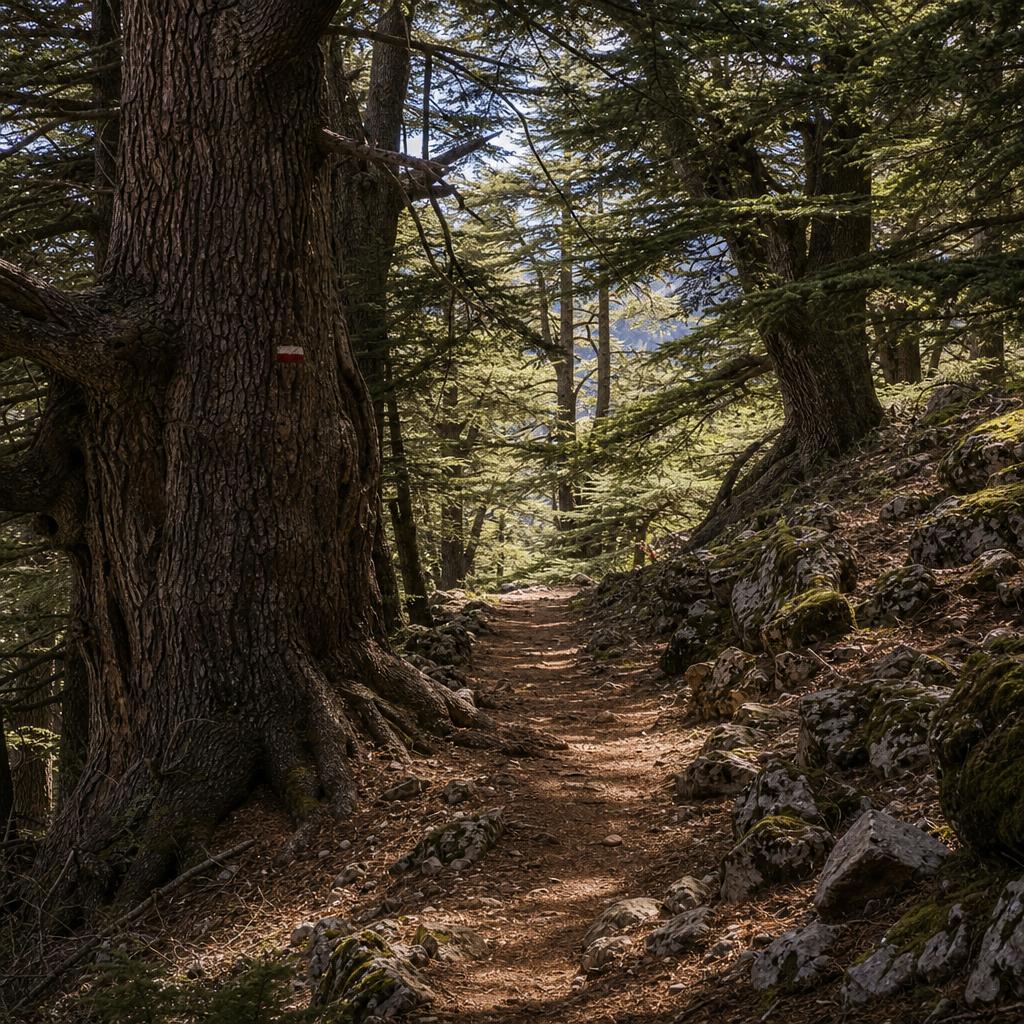
Stay on established paths at all times, even when they are muddy or the shortcut through the vegetation looks brief. Carry out every piece of waste you bring in, including fruit peel and food scraps, which take months to decompose in a dry-season forest environment and attract rodents to human paths in the meantime. Do not pick, break, dig up or collect any living material — this includes mushrooms, wildflowers, cedar cones and bark. Do not light fires under any circumstances in the forest or within a reasonable distance of the tree line. These four habits, applied consistently, account for the majority of direct physical impact that an individual visitor can control.
The fifth habit is harder but more important: actively avoid contributing to macaque habituation. Do not bring food into the forest areas where macaques are regularly sighted. If you see others feeding macaques, you are not obligated to confront them, but you can model different behaviour clearly and, if the situation allows, a calm, brief comment is often received better than you might expect. Guides and regular forest visitors who consistently decline to feed or accommodate feeding behaviour have a genuine effect on the behavioural norms of the clearings over time.
- Stay on established paths — every off-path step is a small contribution to erosion
- Carry out all waste, including organic food scraps and fruit peel
- Do not collect any material: plants, fungi, bark, cones or seeds
- Do not feed macaques under any circumstances, regardless of how they approach
- No fires anywhere in or near the forest, including in cleared areas
- Keep noise low to reduce disturbance to birds and wildlife
Supporting Local Conservation Through Your Choices
Tourism choices have downstream conservation effects that are less visible than litter but more significant in aggregate. When you hire a local guide rather than navigating independently, you support an economy that gives local people a direct financial stake in keeping the forest healthy and visitable. When you choose an operator who demonstrates active commitment to wildlife ethics and minimal-impact practices, you signal a market preference that other operators notice and eventually respond to. These are not abstract points; they describe a genuine feedback loop between tourist spending and land stewardship that operates across Morocco's protected landscapes.
Ask the operations you spend money with what they do concretely to reduce their environmental impact. The quality of the answer will tell you something useful about the organisation. A guide or agency that can articulate specific practices — refusing macaque feeding, keeping groups small, using certain paths to reduce compaction, contributing to local clean-up efforts — is one that has actually thought about the question. One who gives a vague positive-sounding answer but cannot name a specific practice may not have.
After Your Visit: Habits That Extend Beyond the Forest
The conservation habits worth keeping from a cedar forest visit extend beyond the forest boundary. Writing honest, specific reviews of guides and operators who demonstrate good environmental practice helps other travellers make better choices. Sharing accurate information about etiquette — particularly macaque feeding — with other travellers you encounter in Azrou costs nothing and may shift one or two behaviours. Avoiding the purchase of products made from wild-harvested cedar oil without verified sustainable sourcing (sold in medinas and tourist markets throughout Morocco) removes one small economic incentive for unsustainable forest extraction.
None of these post-visit habits are burdensome, and none of them require you to become an environmental advocate. They require only that the things you noticed in the forest — its scale, its age, its fragility — stay with you long enough to inform a few subsequent decisions. That is, in the end, what the most honest travel does: it leaves you slightly more aware of the world's textures, and slightly more careful about your place within them.