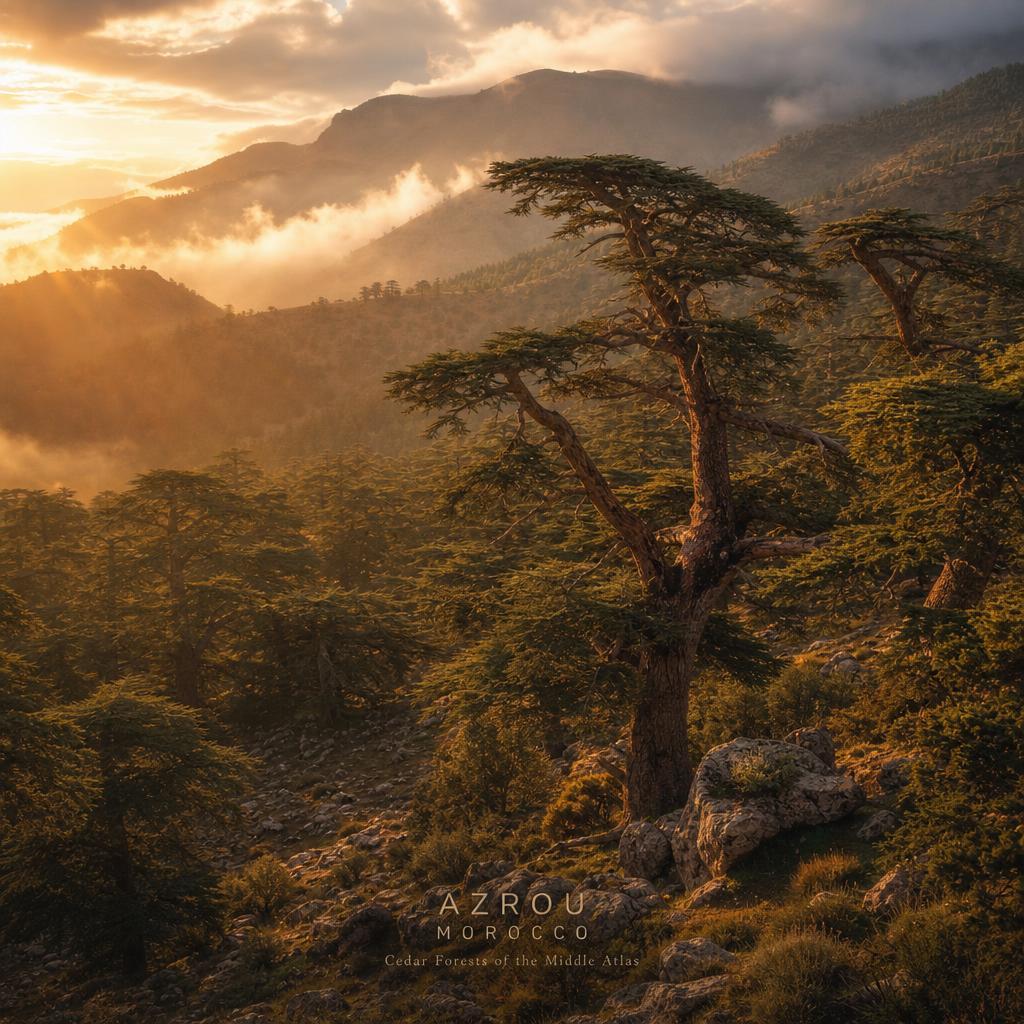
The Autumn Palette of the Middle Atlas Forest
The cedar trees that give the Azrou forest its character are coniferous and evergreen — they do not change colour in autumn, which means the visual interest of the season depends on the deciduous species mixed through the understorey and forest margins. Oak species native to the Atlas provide yellow-gold and warm brown tones. Ash trees at the forest edge and near seasonal watercourses go a clear, warm yellow before dropping. Hawthorn and wild fruit trees contribute russet and deep orange accents against the persistent grey-green of the cedar canopy above.
The contrast between evergreen cedar and turning deciduous trees is the most visually distinctive feature of an autumn Middle Atlas composition. It is not the solid sheet of colour you might find in a New England forest — it is more complex and variable, requiring you to look for the right combination of elements in the frame. A path curving between an old cedar and a gold-leafed oak, with mountain light coming across at a low angle, produces an image that looks specifically like this landscape rather than a generic autumn scene.
Light Quality in Autumn: Lower Angles and Longer Golden Hours
The sun's lower position in the sky during autumn extends the golden hour period considerably compared with summer. In late summer and early autumn in the Middle Atlas, usable warm light lasts longer both in the morning and evening, giving photographers more time to work with before the light goes flat. The lower sun angle also drives light further under the cedar canopy than summer sun does — illuminating trunk bases and the forest floor in ways that high-summer overhead light cannot reach.
Late afternoon light in autumn is particularly useful for the golden oak understorey. The warm-toned leaves absorb and re-emit low sun effectively, glowing from within in a way that midday light does not replicate. Position yourself so the sun comes through the leaves rather than falling on their surface — this backlit quality separates outstanding autumn forest photography from competent snapshots of brown trees.
- Backlit deciduous leaves in late afternoon glow distinctively — position yourself with the sun behind the foliage
- Extended golden hours in autumn give more working time for warm-light photography
- Cedar trunks provide vertical contrast against the horizontal bands of colour change
- Mountain mist at dawn is more common in autumn — arrive early for atmospheric conditions
- Include some full-green cedar shots to provide visual contrast to the warm-toned deciduous trees
Choosing Compositions That Capture the Seasonal Transition
The most compelling autumn forest images show the season in transition rather than capturing a single colour at its peak. A frame that includes both the deep green of mature cedar and the warm gold of a turning oak tells a richer story than one or the other in isolation. Look for compositions where cedar trunks frame a background patch of warm foliage, or where a fallen leaf pattern on the forest floor contrasts with a root system and living canopy above.
Depth matters in autumn forest compositions more than at other seasons. Because the colour change happens at different levels of the forest simultaneously — canopy gold, ground layer of fallen leaves, mid-height understorey — a composition with a clear foreground, midground and background separates the layers visually. A wide-angle lens used low to the ground, with fallen leaves sharp in the foreground and the canopy visible at depth, is one of the most effective approaches.
Gear and Planning for an Autumn Photography Walk
Autumn in the Middle Atlas brings unpredictable weather. Morning frost is possible at higher elevations, afternoon warmth is common at lower forest edges, and rain can arrive quickly. Dressing in layers and protecting your gear with a basic rain cover ensures the weather does not cut your photography session short. Autumn light windows are short; being ready to work quickly when good conditions appear is more important in autumn than in summer.
A circular polarising filter is useful in autumn to reduce the glare from wet or shiny leaves and increase colour saturation in the golden tones of the oak understorey. It also deepens the blue of a clear autumn sky, which provides good contrast against the warm-toned forest below. Plan your route with your guide to include both higher cedar forest and lower-elevation forest margins where deciduous species are more prevalent — the two environments together give you a complete visual account of the season.