Why Distance Is a Photography Advantage, Not a Limitation
Many visitors assume that a closer subject makes a better photograph. With wild primates, the opposite is often true. A macaque that is comfortable and unaware of your presence behaves naturally — it forages, grooms, plays, and interacts with its troop. These behaviours are compelling and visually interesting. A macaque that has noticed your proximity and feels pressured will stare directly at the camera, hunch its posture, or move away entirely. None of those stress responses make for images that tell a real wildlife story.
A focal length of 200 mm to 400 mm (or the equivalent telephoto zoom range on a compact camera or phone) allows you to fill the frame with a single animal from 10 to 20 metres — a distance at which most macaques remain relaxed. At that distance you are also safer: macaques in the wild are not dangerous, but they are strong and unpredictable if they feel cornered or if they associate people with food. Maintaining distance is as much about your wellbeing as theirs.
Understanding Stress Signals in Wild Macaques
Knowing what a stressed macaque looks like helps you adjust your behaviour before damage is done. Signs of discomfort include: direct sustained eye contact (which macaques read as a threat), lip-smacking directed at you, a rigid upright posture with weight forward, moving toward you with intention, or the troop moving rapidly away together. Any of these is a clear signal to increase your distance, lower your camera, and allow the animals to settle.
Relaxed macaques are visually distinctive: they move fluidly through the canopy or across the ground, they groom one another, younger animals play-fight or chase, and adults focus on foraging. This is the behaviour you are waiting to photograph. Arriving at a site quietly, sitting still on the forest floor, and allowing the troop to habituate to your presence over fifteen to twenty minutes — rather than following them — is consistently the most effective way to get natural shots.
- Never feed macaques: it changes their behaviour permanently and creates dangerous dependency
- Never touch or attempt to touch macaques, even if they approach you
- Do not chase or herd macaques toward a better background
- Do not use audio playback or calls to attract macaques
- Never surround a macaque or cut off its escape route
Gear Choices for Ethical Wildlife Photography
A telephoto lens or zoom is the most practically ethical piece of gear for macaque photography because it lets you stay at a respectful distance while still obtaining usable images. For travellers carrying only a smartphone, attaching a small telephoto clip-on lens (widely available and inexpensive) extends your reach meaningfully. The native telephoto zoom modes on recent flagship phones also perform well enough for web sharing and social media in good light.
Avoid using flash at close range with any wildlife. A sudden bright flash causes a startle response and, at very close range, can temporarily impair vision. Natural forest light in the Middle Atlas is often sufficient for ISO settings that allow fast enough shutter speeds to freeze animal movement — 1/400 s at ISO 800 is a reasonable starting point in dappled forest light. If the light is genuinely too low, accept that those conditions are not good for macaque photography and use the time for forest landscape work instead.
The Photograph Worth Taking
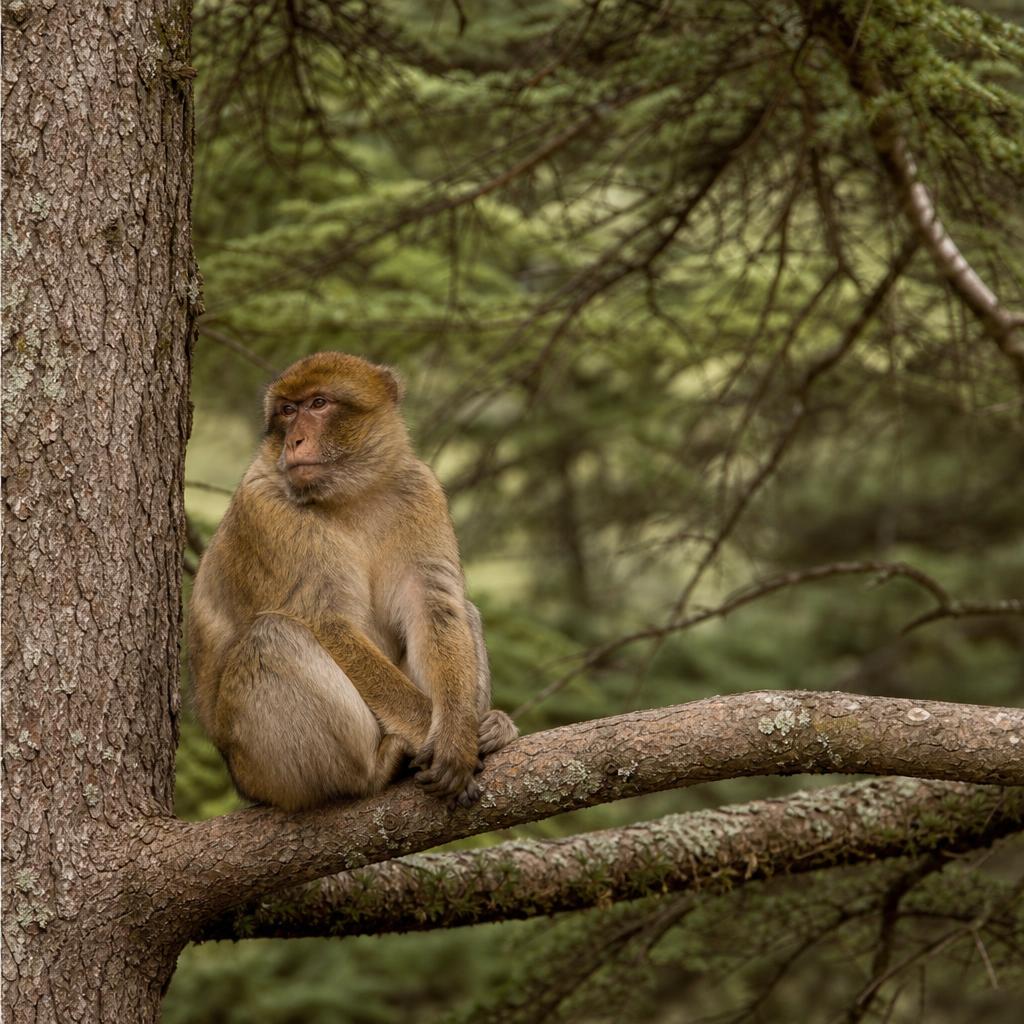
The most meaningful macaque photographs show animals in context: a juvenile clinging to its mother against a background of cedar branches, an adult male watching the dawn from a high perch, a small group moving through dappled forest light. These images communicate something true about the relationship between the animal and its habitat. They are more informative and more powerful than a tight close-up taken from an uncomfortable distance.
After your visit, consider how you share your images. Captions that describe the animal's natural behaviour and the forest context contribute to conservation awareness. Captions that describe how close you got, how you attracted the animal, or that use language suggesting ownership or control of a wild animal inadvertently encourage other visitors to replicate those behaviours. A simple, factual description of what the animal was actually doing is always the most responsible choice.