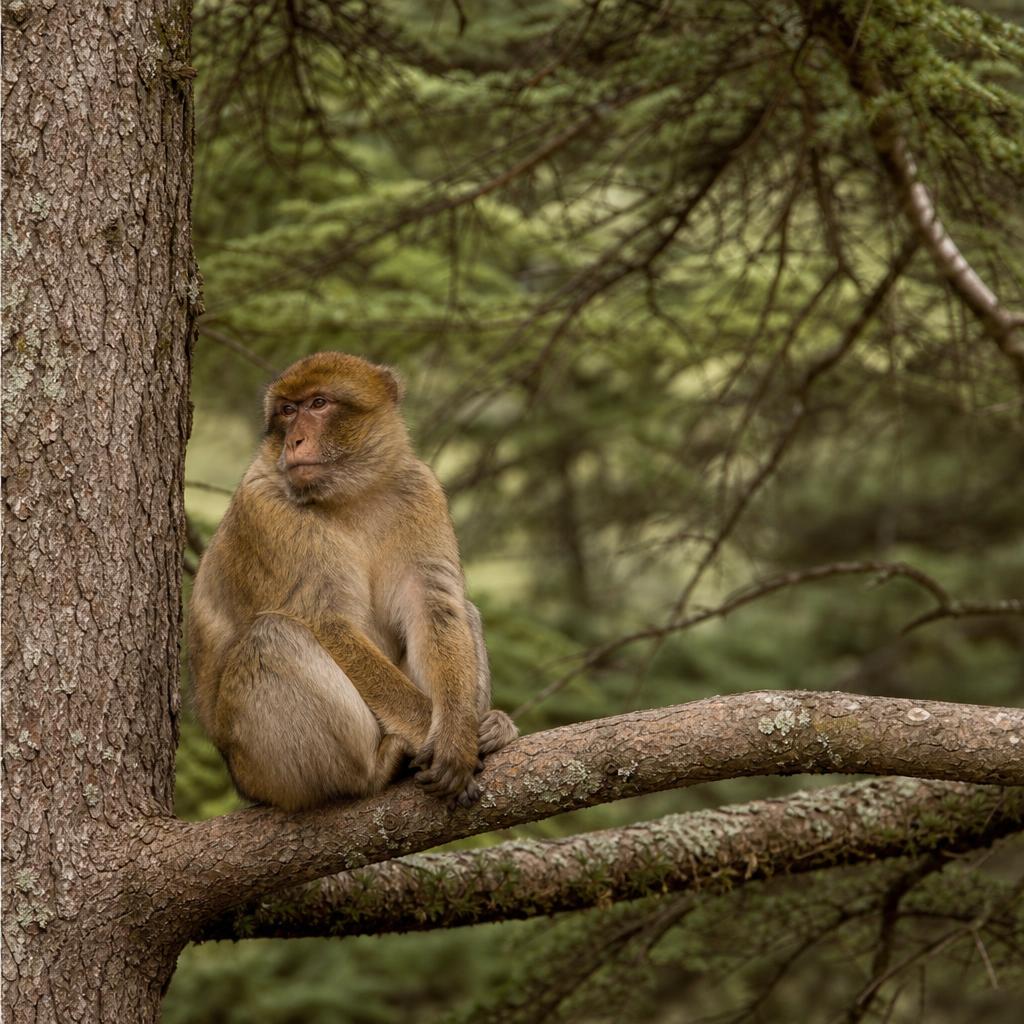
Why Ethical Observation Matters for Barbary Macaques
Barbary macaques (Macaca sylvanus) are classified as Endangered on the IUCN Red List, with their range now largely confined to fragments of cedar and oak forest across Morocco and Algeria, plus a small introduced population in Gibraltar. The Azrou region is one of the most accessible places in the world to observe them, which makes visitor behaviour a genuine conservation issue. When large numbers of people crowd around a troop, push too close for photographs, or repeatedly flush the animals from resting spots, they increase stress hormones, disrupt foraging, and can separate mothers from infants.
Ethical observation is not a sacrifice — it produces better encounters. A troop that has not been alarmed will continue eating, grooming, playing and interacting naturally, giving you far more interesting behaviour to watch than a group of nervous animals glancing toward the exit. The goal is to be a neutral presence in the forest rather than a source of disruption.
Practical Distance and Positioning
A useful rule of thumb is to stop whenever a macaque looks directly at you and freezes. That gaze is an assessment, and if you hold still or quietly increase your distance, the animal will usually return to what it was doing. Moving sideways rather than forward or backward is less threatening because it avoids the 'approach' or 'retreat' signals that primates read carefully. A guide familiar with the local troops will position the group at a viewpoint where macaques move freely without feeling boxed in.
Avoid standing between a mother and her infant, between a juvenile and the rest of the troop, or in any narrow corridor that blocks a natural escape route. These positions create stress even at moderate distances. Crouch if you are tall or if the animals are on the ground — making yourself smaller reduces the visual impact of a large human form.
- Stay at least 5–10 metres away at all times
- Never surround or encircle a troop
- Do not block paths between animals
- Crouch slowly rather than looming over ground-level macaques
- Keep voices low and movements predictable
What a Responsible Wildlife Visit Looks Like
A well-run macaque visit begins with a briefing before you enter the forest. A responsible guide will explain the no-feeding rule, the distance guidelines, and the signs of stress to watch for — yawning to show teeth, rapid lip-smacking, rapid retreat into canopy. The visit is then shaped by wherever the troop naturally is, not by herding the animals toward a photogenic spot. You move with the forest rather than imposing a script on it.
The best visits tend to last between 90 minutes and three hours, because calm prolonged presence at a respectful distance gives the troop time to habituate to you and resume normal behaviour. Rushed 20-minute stops, or visits where guides call out or throw objects to attract attention, produce the opposite result. Always verify the approach your guide takes before you book.
After the Encounter: Leaving the Forest as You Found It
Carry out everything you carry in. Food wrappers left on the ground attract macaques and trains them to associate humans with food rewards — precisely the association that ethical observers work to prevent. If you photograph the troop, do so from your established distance without using flash, which can startle animals and may affect their vision temporarily.
Consider supporting organisations that monitor Barbary macaque populations in Morocco. Research groups and conservation NGOs working in the Middle Atlas occasionally welcome volunteers or donations; your guide may know which local initiatives are currently active. Verify any claims about their work before contributing.