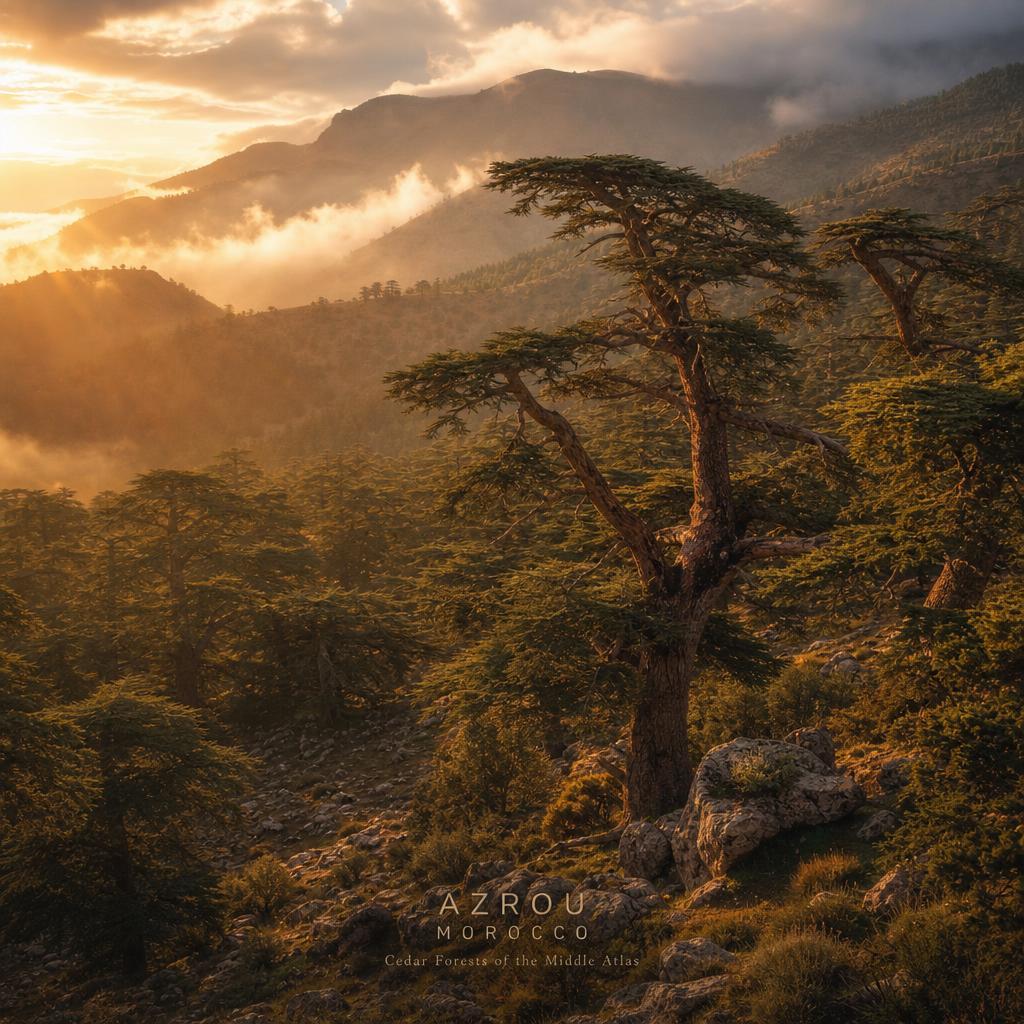
Where the Crowds Go — and Why
Most visitors to the Azrou cedar forest spend their time in the accessible roadside clearings where Barbary macaques are regularly sighted and vehicles can park easily. These spots serve a purpose: they bring people into contact with the forest quickly and require no navigation skill. But they also concentrate foot traffic, noise and the kind of frantic macaque-feeding behaviour that experienced visitors find distressing and unhelpful. Understanding that the roadside clearings are a starting point rather than the full picture is the first step toward finding a different quality of experience.
Coaches typically arrive from mid-morning and depart around midday, creating a window of relative quiet in the very early morning and again from early afternoon on most days. The timing varies with seasons, school holidays and travel patterns, so there is no guarantee — but these broad patterns hold often enough to be worth planning around. If you arrive before 8 a.m. on a weekday, the forest is likely to feel like a genuinely different place from what a noon visitor encounters.
Paths That Carry Fewer Footsteps
The forest interior, reached by walking fifty to a hundred metres away from the main road clearings, carries significantly less foot traffic. This is partly because the terrain becomes less manicured — tree roots cross the path, the ground is softer with needles, and the path is less clearly defined — and partly because many visitors do not have a guide to orient them once the open clearing is behind them. With a local guide, moving from the crowded periphery to the quieter interior is a fifteen-minute walk that transforms the experience entirely.
Ridge paths that gain elevation away from the valley floor also carry fewer people, and the views from these higher sections reveal the true scale of the forest belt across the Middle Atlas landscape. Seasonal tracks near water sources are quieter still, though their accessibility depends on rainfall and the time of year. A guide with current local knowledge will know which paths are in good condition and which should be avoided — this is the practical advantage of local expertise over any printed or digital map.
What Genuine Forest Quiet Allows
When the cedar forest is genuinely quiet — no engine sounds reaching you, no other group voices audible — the sensory field changes completely. Bird calls that were masked by ambient noise become distinct and locatable. The wind in the upper cedar canopy produces a low, susurrant sound that has no urban equivalent. The crack of a branch fifty metres away registers clearly enough that you turn your head. If macaques are present and unaware of any crowd pressure, they behave differently: moving more naturally, feeding without the agitated urgency that proximity to feeding humans produces.
Quieter conditions are not only more pleasant for the human visitor. They are genuinely less disruptive to the forest ecosystem. Large groups with high noise levels alter animal behaviour, cause birds to flush repeatedly and displace macaques from feeding routes. Smaller, quieter groups moving slowly reduce this impact considerably. This is one reason experienced guides prefer early, smaller-group walks: the quality of both the human experience and the wildlife encounter improves when the forest is not already disturbed.
- Walk in groups of four or fewer where possible — smaller groups cause less disturbance
- Lower your voice once you enter the forest; sound travels further than you expect under the canopy
- Avoid loud music or phone calls while on the trail
- Pause frequently rather than moving continuously; stillness draws more wildlife activity to your vicinity
Weekday and Seasonal Patterns Worth Knowing
Moroccan school and public holiday calendars significantly affect visitor numbers at the Azrou forest. Weekends throughout the year, and particularly Eid holidays, bring significantly higher domestic visitor numbers. European summer holiday season (July–August) raises international tourist volumes. If your trip dates have any flexibility, arriving on a Tuesday, Wednesday or Thursday during term-time will generally mean a quieter forest. None of this is a strict rule, and conditions can surprise you, but the broad pattern is consistent enough to be useful.
Seasonal variation also affects the quiet. Winter visits, particularly after snowfall, produce an entirely different forest atmosphere: fewer people, muffled sound, and the cedar canopy weighted with snow. Spring brings birdsong and a green understorey not present in summer. Autumn coats the forest floor in a deep layer of fallen cedar needles and produces a particular quality of afternoon light. Each season has its own kind of quiet; only summer midday reliably disappoints on both counts — crowds and heat simultaneously at their peak.