Why Consent Matters More Than the Shot
Travel photography of communities carries an unequal power relationship: the photographer has the choice to take the image or not, to decide how it is framed and captioned, and to share it with an audience the subject may never encounter. In the villages of the Middle Atlas, people live and work in these places every day. They are not presenting themselves for tourism. Treating their homes, work, children and faces as photographic subjects without their knowledge or agreement reduces them to props in someone else's story.
This is not a reason to avoid photography entirely — it is a reason to approach it differently. When you ask permission, introduce yourself (your guide can help with language), explain simply that you find the village beautiful and would like to photograph it, and wait for a clear, unambiguous 'yes'. If the answer is unclear, hesitant or non-verbal, treat it as a 'no'. This approach protects the subject's dignity, makes your eventual photograph more meaningful and leaves the community with a positive experience of visitors that future travellers benefit from too.
Practical Language and Body Language for Asking
Your local guide is the most reliable bridge for permission conversations. A guide who knows the village and its people can contextualise who you are, what you are interested in and why — reducing the interaction from 'foreign stranger pointing a camera' to 'guest of someone we know'. This matters enormously in communities where trust is built through relationships rather than transactional exchanges. Do not attempt to photograph people quietly while your guide is distracted; this undermines the relationship they have built.
When asking directly without a linguistic bridge, hold up your camera or phone, point gently and make a questioning gesture — palms up, eyebrows raised. A smile and a patient pause while you wait for a response communicates respectful intention. If someone says yes, photograph briefly and then make space to show them the result if they would like to see it; many people enjoy this, and it shifts the interaction from extraction to sharing. If someone says no — verbally or by looking away, covering their face, or stepping back — put the camera down and move on graciously.
- Always ask before photographing individuals, especially women and children
- Accept 'no' immediately and without pushing back or trying again
- Never photograph through windows or over walls to avoid having to ask
- Do not offer payment in exchange for photographs as a first approach
- Turn your camera away during prayers, domestic tasks and private moments
What to Photograph: Architecture, Landscape and Context
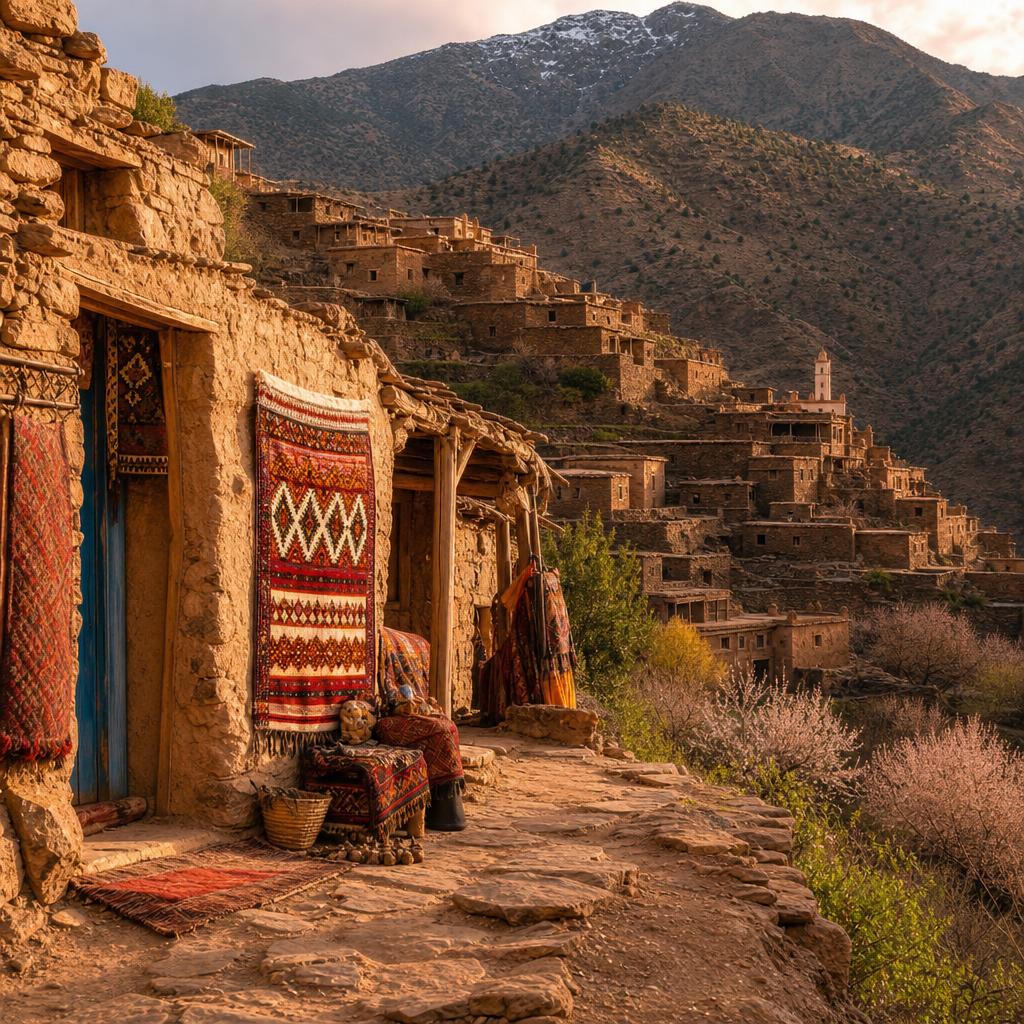
The architecture, agricultural landscape and material culture of Amazigh villages near Azrou are photographable without requiring individual consent and offer rich visual material: stone and earthen construction, terraced fields, wooden balconies, storage structures and the relationship between the built environment and the mountain landscape behind it. These images, composed and contextualised carefully, tell as much about the community's life as a portrait.
Colour and texture are abundant in village environments — indigo doorways, the red-orange of dried peppers hung to cure, stacked firewood, decorated lintels. A combination of wide environmental shots and close-up texture details, assembled into a thoughtful sequence, can tell a compelling visual story about a place without depending on photographing people at all. This approach also makes you a more observant photographer: you look for detail and meaning rather than waiting for a 'human element' to walk into the frame.
After the Visit: How You Share These Images
The ethical responsibility continues after you leave the village. Captions should describe what the photograph shows accurately and without exoticising the subject. Avoid language that presents rural Amazigh life as primitive, frozen in time or defined by its difference from your own. These are communities navigating the same twenty-first-century world you are, making choices about tradition and change on their own terms.
If you share images on social media or travel platforms, do not tag specific village names or GPS coordinates if locals have not consented to increased visitor traffic. The communities near Azrou have varying levels of familiarity with tourist visits, and some quieter villages have chosen to limit access. Your guide will know which communities welcome visitors and which prefer a quieter approach; follow their lead on what and how much to share publicly.