The First Moment Under the Canopy
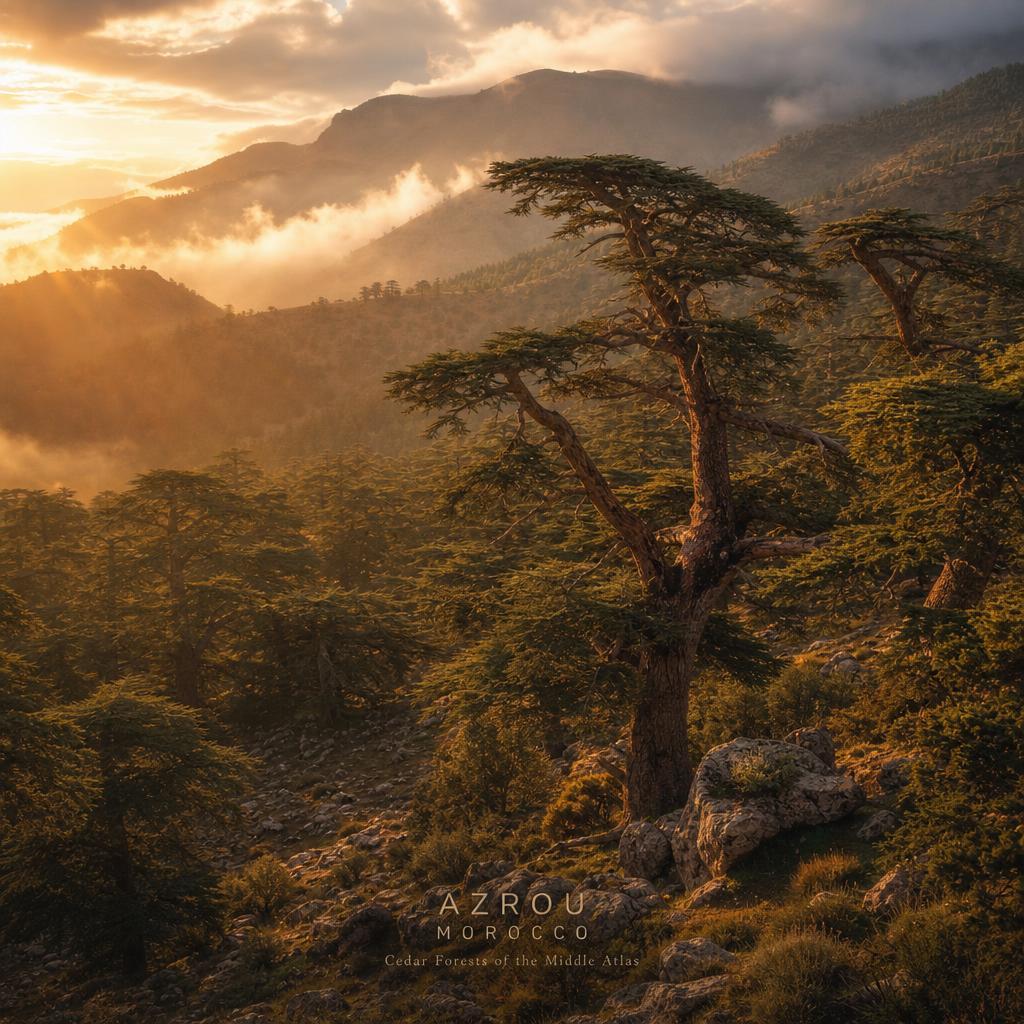
The transition from the open road into the forest interior is immediate and physical. The light changes first — not to darkness, but to a green-filtered softness that removes the harshness of the Atlas sun and slows time slightly. The temperature follows within twenty metres: on a warm day you will feel the drop clearly enough to reach for a layer, and on a cool morning the forest interior can feel almost cold. The smell arrives next, and it is the quality most consistently described by first-time visitors: a clean, resinous, slightly spiced fragrance that is entirely different from any lowland forest and that people reach for the right word to describe — cedar, camphor, something older than either.
The ground underfoot changes character too. The compacted earth of the path edge gives way to a yielding cushion of fallen cedar needles, and the silence of the needle duff is different from the silence of rock or grass. Your footsteps become quieter. The sound of the road, if it was audible, starts to lose definition behind the trunks. The forest is doing what forests do: enclosing, absorbing, offering a different register of experience to the one you brought in from the open air.
The Scale and Age of the Trees
Standing next to a genuinely old Atlas cedar requires a particular adjustment of perspective. The trunk is not merely wide — it has a density of presence that younger trees do not carry, a visual weight created by centuries of slow growth. The bark is deeply furrowed, grey-brown and scaled, and it holds moisture long after rain. Reaching out to touch it (gently, without breaking anything) communicates something that looking does not: the roughness, the solidity, the slight coolness of the shaded side. Photographs taken here consistently disappoint their takers because they remove the peripheral visual field — the surrounding trunks, the light-columns between them, the upward narrowing of the canopy — that creates the experience of scale.
Looking up inside a mature cedar grove is its own exercise. The canopy layers between you and the sky in a way that forests with a single crown layer do not: lower branches, mid-canopy spread, and then the irregular upper silhouette of the oldest crowns against the blue. This layering creates depth, and it is the depth — the sense of vertical as well as horizontal space — that makes the forest feel architectural. More than one visitor has described standing inside the oldest grove near Azrou as feeling like the interior of a building that happens to be alive.
Sound, Light and Seasonal Change
The soundscape of the cedar forest shifts dramatically with the season and the time of day. On an early spring morning the forest is loud with birdsong — tits, nuthatches, woodpeckers and the far-carrying calls of ravens overhead. By midsummer midday the birds have mostly gone quiet and the dominant sound is the dry wind moving the upper canopy, a long-wave sighing that ebbs and swells with the gusts. Autumn introduces the soft percussion of cedar cones dropping and rolling on the needle carpet. Each season offers a different auditory environment, and none of them can be reproduced or imported; they are entirely place-specific.
Light inside the forest is in constant motion. As the sun moves, it finds different gaps in the canopy, creating shifting columns of illuminated dust and pollen that change angle and width through the morning. Photographers have been known to wait in one spot for an hour watching these columns move, and if you allow yourself enough time you will understand why. The diffuse green light of an overcast day is different again — even, softening, pushing the contrast from the scene and revealing the mossy understory in colours that strong sun washes out. The forest is a different place under every sky.
The Emotional Register of the Place
Several things about the Azrou cedar forest are difficult to quantify but easy to verify in your own experience. The first is the sensation of scale reversal that large, old trees produce: you are reminded, physically and without any rhetoric, that you are a small and temporary thing in a landscape that existed before you and will outlast you. This is not a melancholy sensation; for most people it is clarifying and genuinely restful. The second is a quality that regular forest walkers describe as psychological deceleration — the tendency of forest environments to slow down anxious or scattered mental states, a phenomenon that has been studied formally in Japan under the term 'forest bathing' (shinrin-yoku) but that most people discover empirically on their first slow walk.
The third quality is more specific to this place: the cedar forest near Azrou carries a particular combination of wildness and accessibility that is rare in North Africa. It is not a garden, not a park, not a managed aesthetic experience — it is a genuine old forest that happens to be reachable in half an hour from a town with comfortable accommodation. That combination is the source of the quiet disbelief many visitors feel when they realise where they are. Verify this for yourself by arriving early, moving slowly and giving the place the time it asks for.